

8 Reasons to Get a Lawyer After a Car Accident
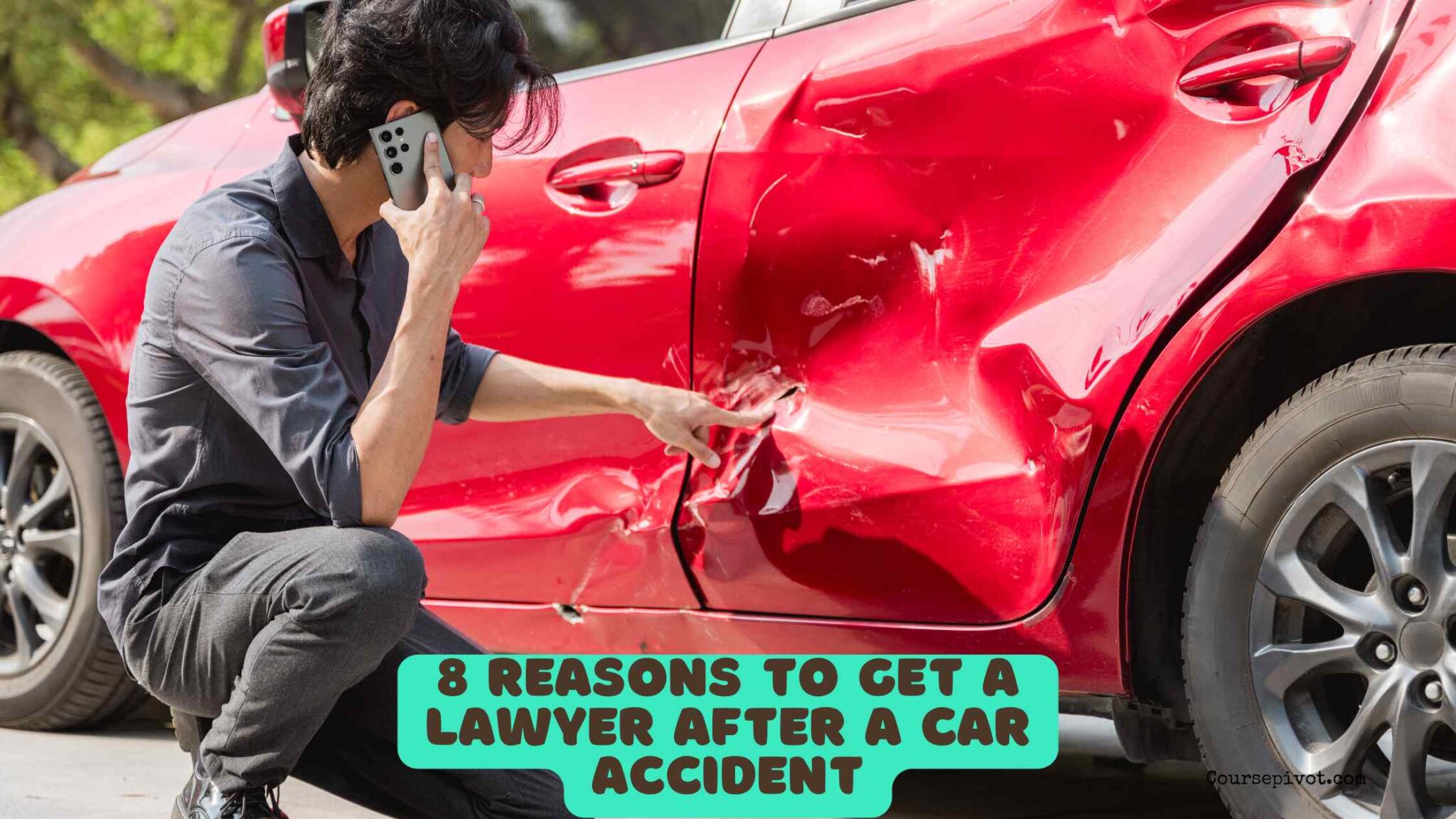
After a car accident, the immediate instinct is to handle things quickly — exchange information, file an insurance claim, and move on. Many people assume that hiring a lawyer is unnecessary unless someone was seriously hurt. That assumption costs accident victims money, legal rights, and sometimes their long-term health coverage every year.
Q: When should you hire a lawyer after a car accident? A: Any accident involving injury, disputed liability, significant property damage, an uninsured driver, or a lowball settlement offer from an insurance company warrants at least a consultation with a personal injury attorney. Most car accident lawyers offer free consultations and work on contingency — meaning you pay nothing unless they win.
Insurance companies are businesses. Their adjusters are trained to settle claims for as little as possible, as quickly as possible. An attorney’s job is to ensure that your interests — not the insurer’s bottom line — drive the outcome. Understanding this dynamic is part of the broader financial literacy that shapes major life decisions, just like understanding opportunity cost in real life.
1. You Suffered Injuries — Even Ones That Seem Minor at First
This is the most important reason on the list. Car accident injuries are frequently not fully apparent in the hours or even days immediately following the crash. Whiplash, soft tissue injuries, concussions, herniated discs, and internal injuries can have delayed onset — you may feel sore but functional immediately after the accident and experience significant symptoms days or weeks later.
If you accept a settlement before your injuries fully manifest, you waive your right to further compensation — even if your medical bills and lost wages far exceed what you accepted.
A personal injury attorney will advise you to complete your medical treatment before settling and will calculate the full value of your claim including future medical costs, physical therapy, and lost earning capacity — not just what the insurance company offers in the first week.
2. The Other Driver’s Insurance Company Is Pressuring You to Settle Quickly
Speed is a tactic. When an insurance adjuster calls within 24–48 hours of the accident and offers a quick settlement, they are not being helpful — they are trying to close the claim before you understand its full value.
Early settlement offers routinely undervalue:
- Future medical treatment costs
- Lost wages beyond the immediate recovery period
- Pain and suffering damages
- Long-term impact on your ability to work or perform daily activities
Once you sign a release and accept a settlement, the claim is closed. There is no going back if your injuries worsen or your medical bills exceed the settlement amount. An attorney can evaluate whether an offer reflects the true value of your claim and negotiate on your behalf without the time pressure the insurer is trying to create.
3. Liability Is Disputed or Unclear
Not every accident has an obvious at-fault driver. When liability is contested — when both parties claim the other was responsible, when the police report is ambiguous, or when there are no independent witnesses — establishing fault requires investigation, evidence gathering, and sometimes accident reconstruction.
Insurance companies will use disputed liability to minimize their payout or deny your claim entirely. An attorney can:
- Secure and preserve surveillance footage before it is overwritten
- Obtain and analyze the police report and request amendments if it contains errors
- Gather witness statements while memories are fresh
- Hire accident reconstruction experts if necessary
- Counter the other party’s version of events with documented evidence
In disputed liability cases, the difference between having an attorney and not having one is often the difference between receiving fair compensation and receiving nothing at all.
4. Multiple Parties Are Involved
Accidents involving multiple vehicles, a commercial truck, a rideshare driver, a government vehicle, or a defective road condition involve multiple potentially liable parties — and multiple insurance policies. The legal and procedural complexity multiplies significantly when more than two parties are involved.
Identifying all responsible parties, understanding which insurance policies apply and in what order, and coordinating claims against multiple defendants requires legal expertise that goes well beyond what most individuals can reasonably navigate on their own.
Trucking accidents in particular involve federal regulations, commercial insurance policies with different rules than personal auto insurance, and corporate defendants with dedicated legal teams. Attempting to handle such a claim without representation places you at a serious disadvantage.
5. Your Claim Was Denied or Significantly Undervalued
If the insurance company has denied your claim outright, assigned you a fault percentage that seems inflated, or offered a settlement that does not come close to covering your actual damages, those are exactly the situations attorneys are equipped to address.
Insurance companies have legal teams and years of experience handling claims. You have one claim. The asymmetry is significant.
An experienced car accident attorney knows how insurers value claims, what evidence moves the needle, and how to escalate through negotiation, demand letters, and if necessary, litigation. The mere fact that an attorney is involved often results in higher settlement offers — insurers know that a represented claimant is more likely to pursue their full legal rights.
6. You Are Unable to Work Due to Your Injuries
Lost wages are compensable in a personal injury claim — but calculating them accurately, and projecting future lost earning capacity if your injuries affect your ability to work long-term, requires more than a few weeks of pay stubs.
A serious injury that prevents you from returning to your prior occupation, or that results in permanent limitations on the type of work you can perform, can have a lifetime financial impact. Quantifying that impact — through vocational experts, medical testimony, and economic analysis — is something a personal injury attorney does routinely and that most accident victims are not equipped to do alone.
Lost earning capacity is one of the most commonly undervalued components of car accident settlements — and it is one of the areas where legal representation consistently produces the largest difference in outcomes.
7. The Accident Involved an Uninsured or Underinsured Driver
Approximately 1 in 8 drivers in the United States is uninsured. If the at-fault driver has no insurance — or has minimum coverage that is far less than your damages — recovering full compensation becomes significantly more complicated.
In these situations, your own uninsured/underinsured motorist (UM/UIM) coverage may be your primary source of recovery. Navigating a claim against your own insurance company, which has the same financial incentive to minimize your payout as the at-fault driver’s insurer, while also potentially pursuing the at-fault driver directly, requires legal guidance.
An attorney can assess all available coverage, advise on whether a personal judgment against the uninsured driver is realistic, and maximize the recovery available through every applicable policy.
8. You Simply Do Not Know What Your Claim Is Worth
This is the most honest reason of all — most people have no realistic framework for valuing a personal injury claim. Without knowing the typical multipliers used for pain and suffering, how future medical costs are projected, what punitive damages might apply, or how comparative fault percentages affect recovery in your state, you cannot evaluate whether a settlement offer is fair.
Attorneys evaluate car accident claims constantly. They know what similar cases have settled for. They know which facts increase value and which create vulnerability. A free consultation with a personal injury attorney does not obligate you to hire anyone — but it gives you information you cannot get any other way before making a decision that closes your legal rights permanently.
Most car accident attorneys work on contingency fees, typically 33% of the recovery. If they do not win, you pay nothing. That fee structure means attorneys take cases they believe have merit — and it means their incentive is aligned with yours: the higher your recovery, the more they earn.
Understanding your legal rights after an accident is part of the same civic and financial literacy that covers reasons you can be denied unemployment benefits and how to navigate jury duty obligations — all situations where knowing the rules of the system matters enormously to the outcome you experience.