

7 Reasons Why Cooking Should Be Taught in Schools
Cooking is not a vocational skill for aspiring chefs — it is a life skill that affects every person's health, finances, and independence from the day they leave home.
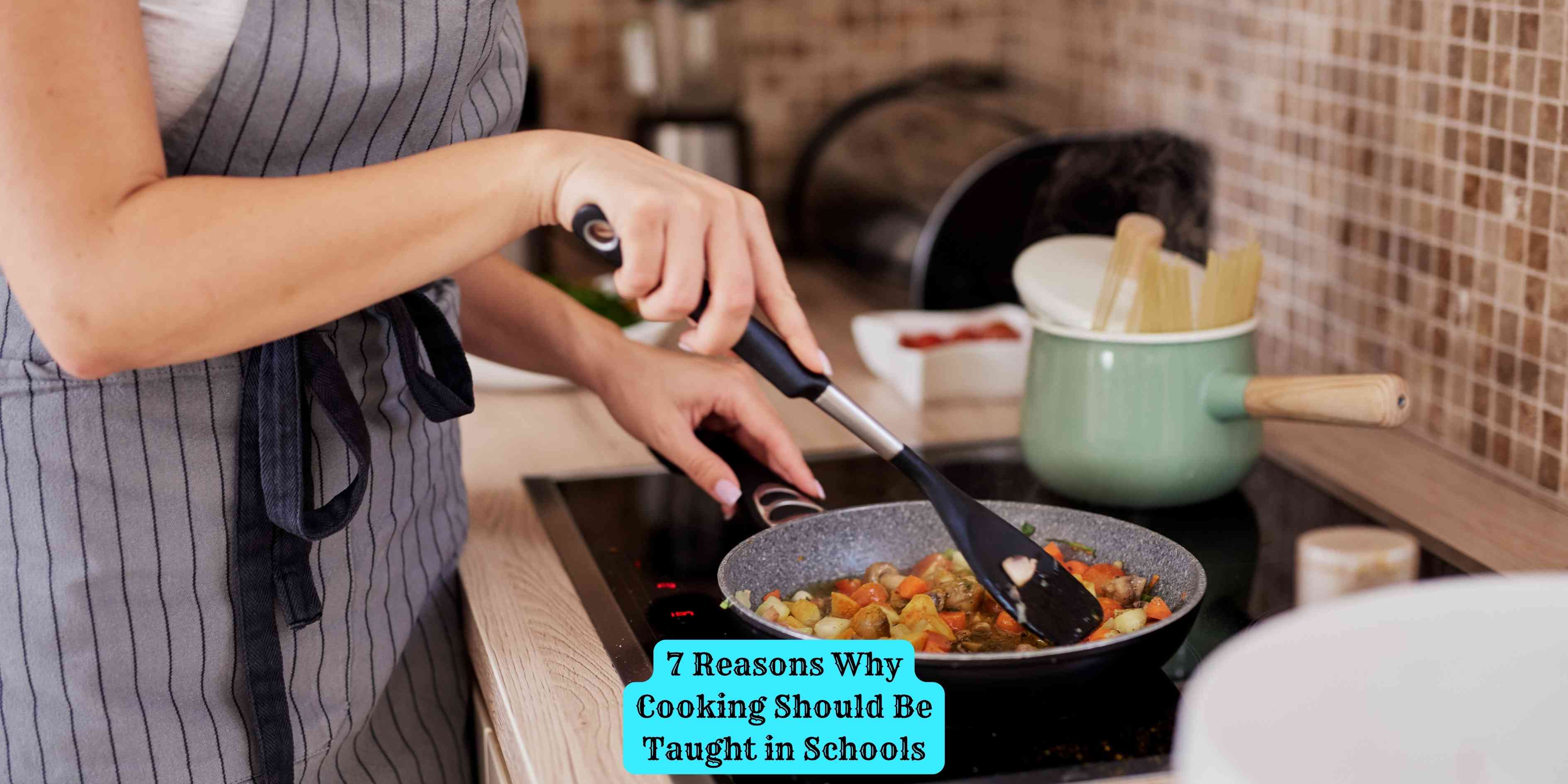
Cooking should be taught in schools because it is a practical, health-affecting, financially significant life skill that most students will use every single day of their adult lives. Yet most school curricula make no room for it. The case for cooking education is not about turning students into amateur chefs — it is about giving them the tools to feed themselves well, understand nutrition, manage a food budget, and develop self-sufficiency.
A student who graduates knowing how to write a five-paragraph essay but not how to cook a nutritious meal from basic ingredients has gaps in their education that will show up at the dinner table every day for the rest of their life.
Here are seven reasons cooking education belongs in schools.
1. It Teaches Nutrition in a Way That Actually Sticks
Most health education involves passive instruction — students are told that vegetables are good and processed food is bad, without ever being shown how to prepare a meal from whole ingredients. Cooking class changes this by making nutrition tangible.
When students prepare a meal themselves, they see exactly what goes into it. They learn to read ingredient labels, understand macronutrients in practical terms, and recognize the difference between a meal built around whole foods and one based around packaged convenience products. This kind of hands-on nutrition education tends to influence real behavior in a way that classroom lectures rarely do.
Research consistently shows that people who cook at home more frequently eat more nutritious diets, consume fewer calories from processed foods, and have better health outcomes over time. Teaching cooking in schools is one of the most direct investments a school system can make in long-term student health.
2. It Builds Independence and Self-Sufficiency
One of the most practical functions of education is to prepare students to function as independent adults. The ability to feed yourself — to plan a meal, gather ingredients, prepare food safely, and nourish yourself without relying on takeout or frozen meals — is as fundamental to adult independence as knowing how to manage money or navigate public transportation.
Students who leave home for college or their first apartment without knowing how to cook often default to fast food, expensive takeout, or nutritionally poor convenience options simply because they have no other skill set to draw on. Teaching cooking in school closes this gap before it forms.
It also builds broader practical competence. Students who learn to cook develop patience, attention to detail, following sequential instructions, and problem-solving — all skills that transfer beyond the kitchen.
3. It Has Direct Impact on Financial Health
Food is one of the largest expenses in most household budgets. A person who can prepare meals from basic ingredients consistently spends a fraction of what someone dependent on restaurants or meal delivery spends on food. This gap compounds significantly over time.
Learning to cook is, among other things, a financial literacy lesson. Students who understand how to meal plan, buy ingredients in bulk, use what they have before buying more, and transform leftovers into new meals are practicing a form of budgeting that has measurable real-world impact.
For students from lower-income households especially, learning to prepare nutritious food on a limited budget can have life-changing effects on the household finances they will eventually manage.
4. It Supports Mental Health and Wellbeing
Cooking is increasingly recognized as a meaningful tool for mental health. The act of preparing food — working with your hands, following steps, creating something tangible, and nourishing yourself and others — has genuine therapeutic qualities. It provides a sense of accomplishment, reduces stress through focused physical activity, and creates opportunity for mindfulness.
Cooking also provides a concrete daily ritual that structures time and provides a sense of agency, both of which are important for wellbeing, particularly among young people navigating high-pressure academic and social environments.
Introducing cooking at school age helps students develop this positive habit during a period when mental health challenges are increasingly common.
5. It Teaches Food Safety and Basic Hygiene
Foodborne illness is one of the most preventable public health problems, yet a significant number of cases trace back to basic handling errors — improper food storage temperatures, cross-contamination between raw meat and vegetables, undercooking, or inadequate handwashing.
These errors largely result from ignorance, not carelessness. Students who have never been taught the basics of safe food handling will reproduce those gaps in their adult kitchens. Cooking education that includes food safety instruction — how to store food correctly, at what temperatures different proteins must be cooked, how to prevent cross-contamination — produces adults who handle food safely throughout their lives.
6. It Connects Students to Cultural Identity and Global Awareness
Food is one of the most direct expressions of cultural heritage and identity. Teaching cooking in schools creates opportunities for students to engage with their own cultural backgrounds through food, and to encounter and appreciate the cooking traditions of cultures different from their own.
This kind of cultural engagement through a practical, enjoyable medium tends to be more memorable and more humanizing than historical or textual instruction alone. A student who cooks a dish from another culture has engaged with that culture in a genuinely different way than one who read about it.
Incorporating diverse culinary traditions into cooking education also makes the curriculum more relevant and engaging for students from diverse backgrounds.
7. It Complements Other Academic Subjects
Cooking is not separate from the rest of the curriculum — it is applied practice for multiple academic disciplines. Measuring ingredients involves fractions and ratios. Following recipes requires reading comprehension and sequential thinking. Understanding why certain chemical reactions occur during cooking (why bread rises, why an egg coagulates) is applied chemistry. Calculating cost per serving is arithmetic and budgeting.
Cooking class can reinforce math, science, reading, and economics in ways that feel immediately applicable rather than abstract. Students who struggle to see the relevance of classroom subjects in the abstract often engage more readily when those same skills appear in a practical context they care about.
The argument for cooking in schools is not about adding another extracurricular — it is about closing a gap in functional adult preparation that the current curriculum leaves open. Schools that already include practical life skills education see the value of this approach. For more on how schools can better serve students, why school days should be shorter and why student choice in coursework matters offer related perspectives on educational structure and student engagement.