

7 Obvious Signs of Carpenter Ants in House
Carpenter ants often reveal themselves through large ants indoors, coarse sawdust-like frass, winged ants, moisture-damaged wood, and hidden nest activity.
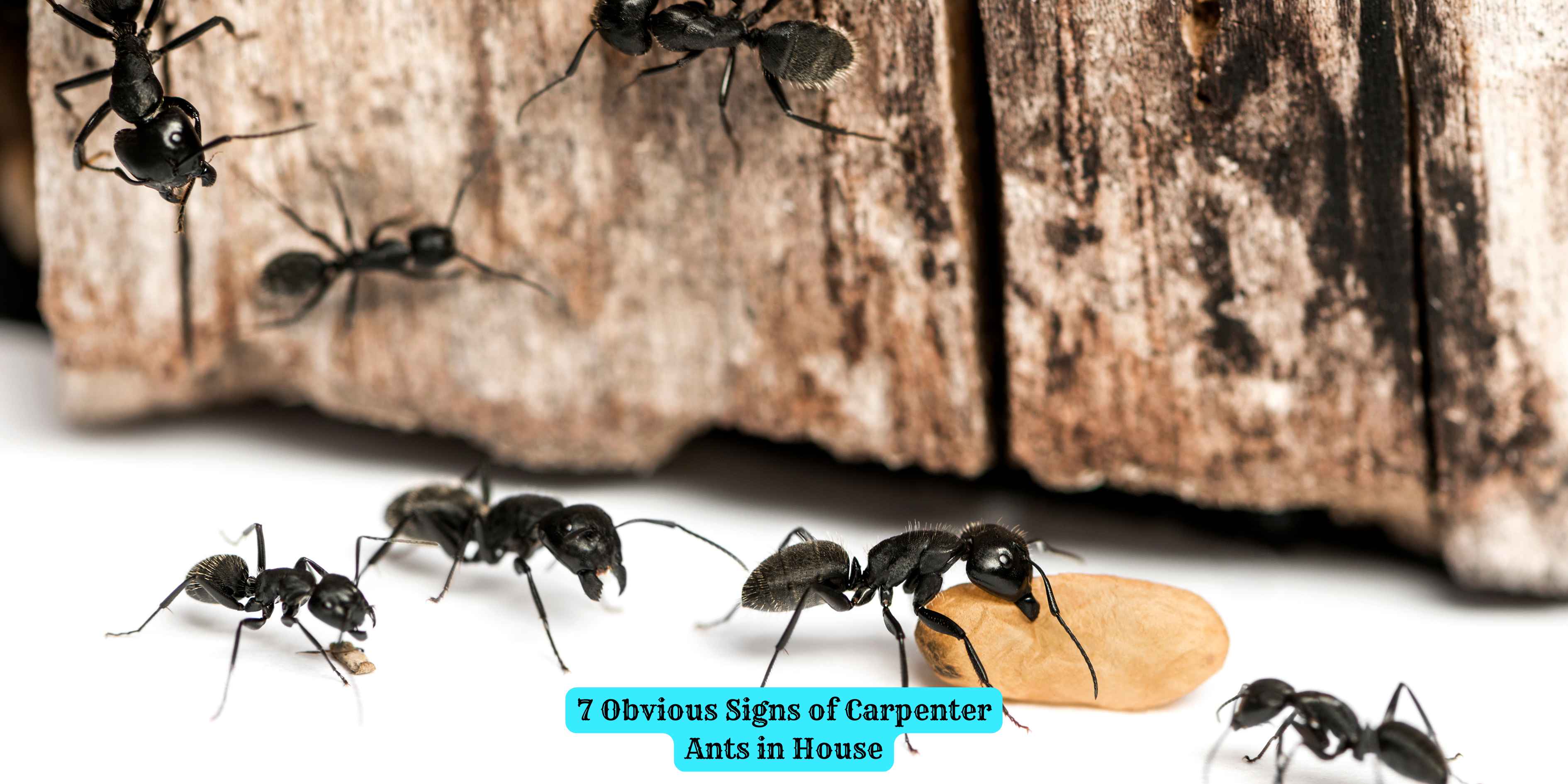
Obvious signs of carpenter ants in a house include large ants indoors, coarse sawdust-like frass, winged ants, rustling sounds in walls, activity near damp wood, hollow or damaged wood, and repeated sightings around kitchens, bathrooms, windows, basements, or crawl spaces.
Carpenter ants do not eat wood like termites. They excavate wood to build nests, especially wood softened by moisture.
Finding carpenter ants indoors often points to a nest nearby and may also point to a moisture problem.
1. Large Ants Indoors
Carpenter ants are usually larger than many common household ants. University extension resources describe them as large brown to black ants that may appear indoors or near damaged wood.
Seeing one ant does not prove an infestation, but repeated indoor sightings deserve attention.
2. Coarse Sawdust or Frass
One of the clearest signs is coarse sawdust-like material called frass. The University of Minnesota Extension lists coarse sawdust as a sign of a carpenter ant nest. North Carolina State Extension explains that carpenter ant frass may include wood fibers and insect body parts.
Look near baseboards, window frames, wall cracks, crawl spaces, closets, beams, and damp wood.
3. Winged Ants Indoors
Large numbers of winged ants indoors, especially from late winter through spring, may indicate a mature colony. These winged ants are reproductive ants leaving the nest.
Do not confuse them with termite swarmers. If you are unsure, collect a sample or take clear photos for a pest professional.
4. Rustling Sounds in Walls
Colorado State University Extension notes that faint rustling noises in walls can be a warning sign. The sound may be more noticeable at night when the house is quiet.
Rustling does not prove carpenter ants by itself, but combined with frass or ant sightings, it becomes more meaningful.
5. Activity Near Moisture-Damaged Wood
The University of Maryland Extension explains that a carpenter ant colony inside a structure is often a sign that there is or has been a water problem.
Check areas near roof leaks, plumbing leaks, window condensation, damp basements, crawl spaces, bathrooms, kitchens, decks, and exterior trim.
6. Hollow or Damaged Wood
Wood damaged by carpenter ants may sound hollow when tapped or show galleries if opened. Unlike termite damage, carpenter ant galleries are often cleaner because ants remove debris.
Damaged wood also needs moisture repair, not just insect treatment.
7. Trails or Repeated Night Activity
Carpenter ants are often active at night. You may see trails along baseboards, counters, foundations, tree branches, wires, or deck rails.
Following trails may help locate entry points or nests.
Practical Takeaway
Carpenter ants in a house usually show up through large ants, frass, winged ants, rustling sounds, moisture-damaged wood, or repeated trails. Because hidden nests can be difficult to locate, persistent signs are a good reason to contact a licensed pest professional.
Also fix leaks and moisture problems, or the same conditions may keep attracting ants. Trim branches away from the house, store firewood away from walls, seal entry gaps, and replace rotted wood when possible.
The most important point is to treat the cause, not only the insects. If carpenter ants found damp wood, the home may need plumbing, roof, window, drainage, or ventilation repairs.