

5 characteristics of oligarchy
Oligarchy is a system where power is concentrated in the hands of a small group. Its main traits include elite rule, inequality, limited participation, and weak accountability.
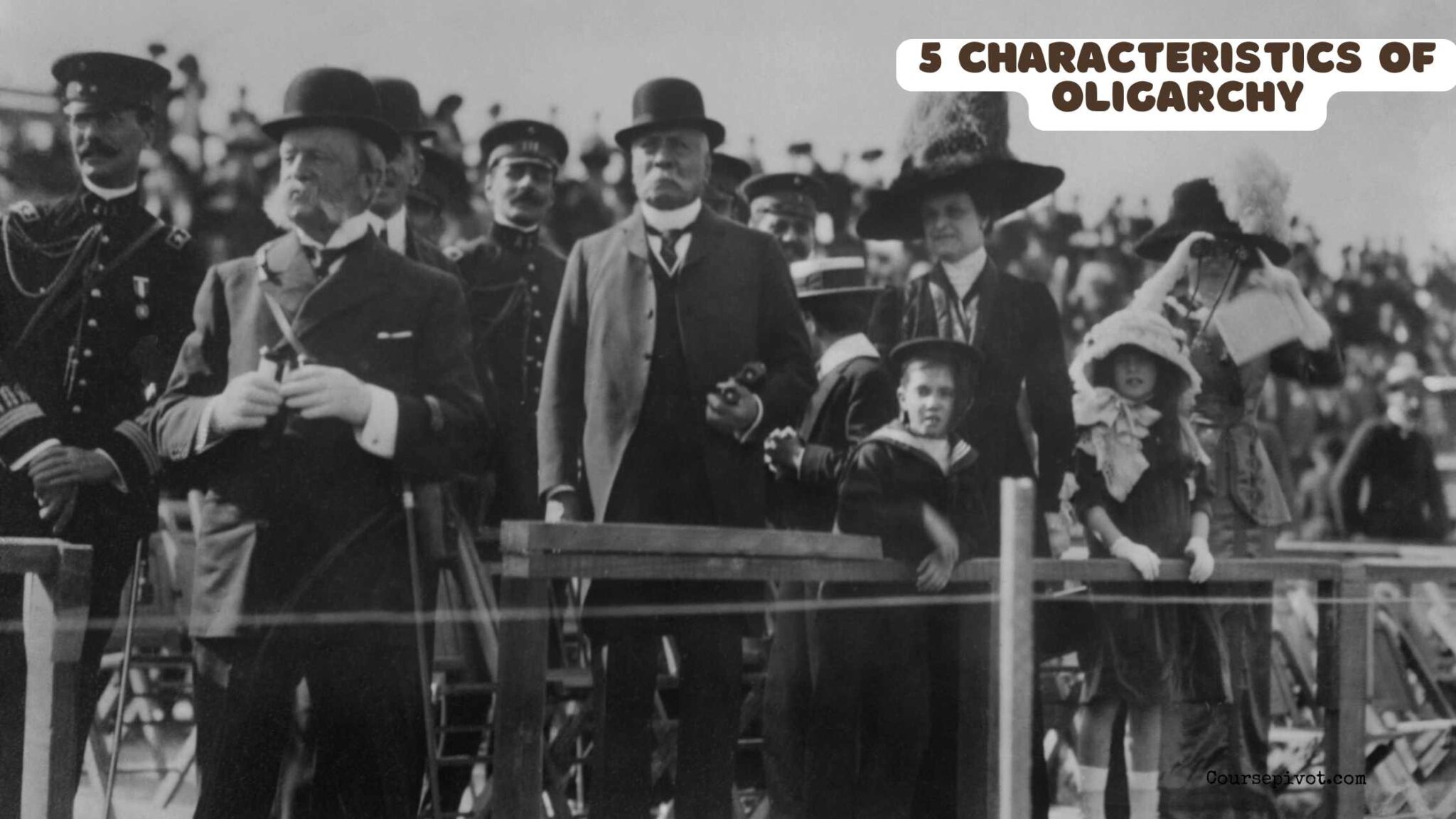
An oligarchy is a system of government or social control where power is held by a small group of people. The word comes from Greek roots meaning rule by the few. In an oligarchy, major decisions are not shaped equally by the general population. Instead, they are strongly influenced by elites who control wealth, military power, political connections, family status, land, corporations, or institutions.
Oligarchy can exist as a formal system, but it can also appear inside systems that claim to be democratic. A country may have elections, courts, and political parties, yet still show oligarchic tendencies if a small group has much more influence than ordinary citizens.
The key idea behind oligarchy is concentrated power: a few people have unusual control over decisions that affect many people.
Power Is Controlled by a Small Group
The most important characteristic of oligarchy is rule by a small group. This group may be made up of wealthy families, business owners, military leaders, party officials, religious leaders, nobles, or politically connected elites.
Ordinary citizens may have little influence over major decisions. Even if they are allowed to speak, vote, or participate in public life, the most important choices may already be shaped by the small group with real power.
This is different from a healthy democracy, where leaders are supposed to be accountable to the people and political power should be distributed more broadly. For a related civics comparison, read how to explain Democrat vs Republican to a child.
Wealth and Privilege Are Concentrated
Oligarchies often involve concentrated wealth. The people with political power may also control businesses, land, natural resources, media, banks, or major industries. This economic power gives them influence over laws, elections, jobs, public opinion, and policy.
When wealth and political power reinforce each other, it becomes harder for ordinary people to compete fairly. The wealthy can fund campaigns, hire lobbyists, influence news coverage, shape education, or pressure officials.
This does not mean every wealthy person is an oligarch. The issue is not wealth alone. The issue is when wealth becomes a tool for controlling public decisions in ways that protect a small group at the expense of the wider society.
Political Participation Is Limited or Unequal
Another characteristic of oligarchy is limited or unequal participation. Citizens may be discouraged from participating, blocked by unfair rules, or given only symbolic involvement.
In some oligarchies, elections may be controlled, opposition parties may be weakened, media may be restricted, or public criticism may be punished. In softer forms, participation may technically exist, but ordinary citizens lack the money, access, or influence needed to shape outcomes.
This is why power sharing matters in political systems. When power is distributed more fairly, it becomes harder for a small group to dominate everyone else. You can explore that idea further in 5 reasons why power sharing is desirable.
Personal Networks Matter More Than Public Rules
In an oligarchy, personal connections often matter more than merit, fairness, or transparent rules. Access to power may depend on family name, loyalty, friendships, business deals, party membership, or private agreements.
This can create favoritism, corruption, and unfair advantage. People close to the ruling group may receive contracts, jobs, protection, licenses, tax benefits, or legal favors. People outside the group may struggle even if they are qualified.
When private networks become stronger than public institutions, trust declines. Citizens may begin to believe that laws are applied differently depending on who someone knows.
Accountability Is Weak
A strong sign of oligarchy is weak accountability. The ruling group may avoid consequences for corruption, abuse of power, poor decisions, or unfair treatment.
This can happen when courts are weak, media is controlled, elections are manipulated, or oversight institutions are loyal to the elite rather than the public. Without accountability, leaders can protect themselves while ordinary people carry the cost.
Accountability is important because power without checks can become abusive. It is one reason democracies rely on courts, free press, elections, civil society, and separation of powers. These systems are designed to prevent any one group from becoming too dominant.
Oligarchy vs Democracy
Oligarchy and democracy differ mainly in who holds real power. In a democracy, the people are supposed to have meaningful influence through voting, rights, representation, debate, and public accountability.
In an oligarchy, power is concentrated among the few. The public may still be present, but its influence is weaker than the influence of elites.
The difference is not always simple. Some countries may be partly democratic while also showing oligarchic patterns. That is why political scientists often look at how power actually works, not only what a constitution says.
Examples of Oligarchic Tendencies
Oligarchic tendencies can appear in many areas. A political party may be controlled by a small inner circle. A country may be shaped by a few wealthy families. A business sector may dominate public policy. A military elite may control civilian leaders.
Even markets can show similar concentration patterns. For example, an oligopoly happens when a small number of firms dominate an industry. It is not the same as oligarchy, but both involve concentration. For an economic example, read why the automobile industry is considered an oligopoly.
Recognizing these patterns helps students understand how power can become concentrated in politics, economics, and society.
Final Thoughts
The 5 characteristics of oligarchy are rule by a small group, concentrated wealth and privilege, limited or unequal political participation, reliance on personal networks, and weak accountability.
Oligarchy matters because it shows what can happen when public power becomes private advantage.
The best protection against oligarchic control is a society with strong institutions, fair laws, active citizens, independent media, public accountability, and real opportunities for ordinary people to participate.