

15 Signs You Are Poor
Poverty doesn't always look like what people picture. These 15 signs describe the practical realities of financial struggle — and point toward what can be done about them.
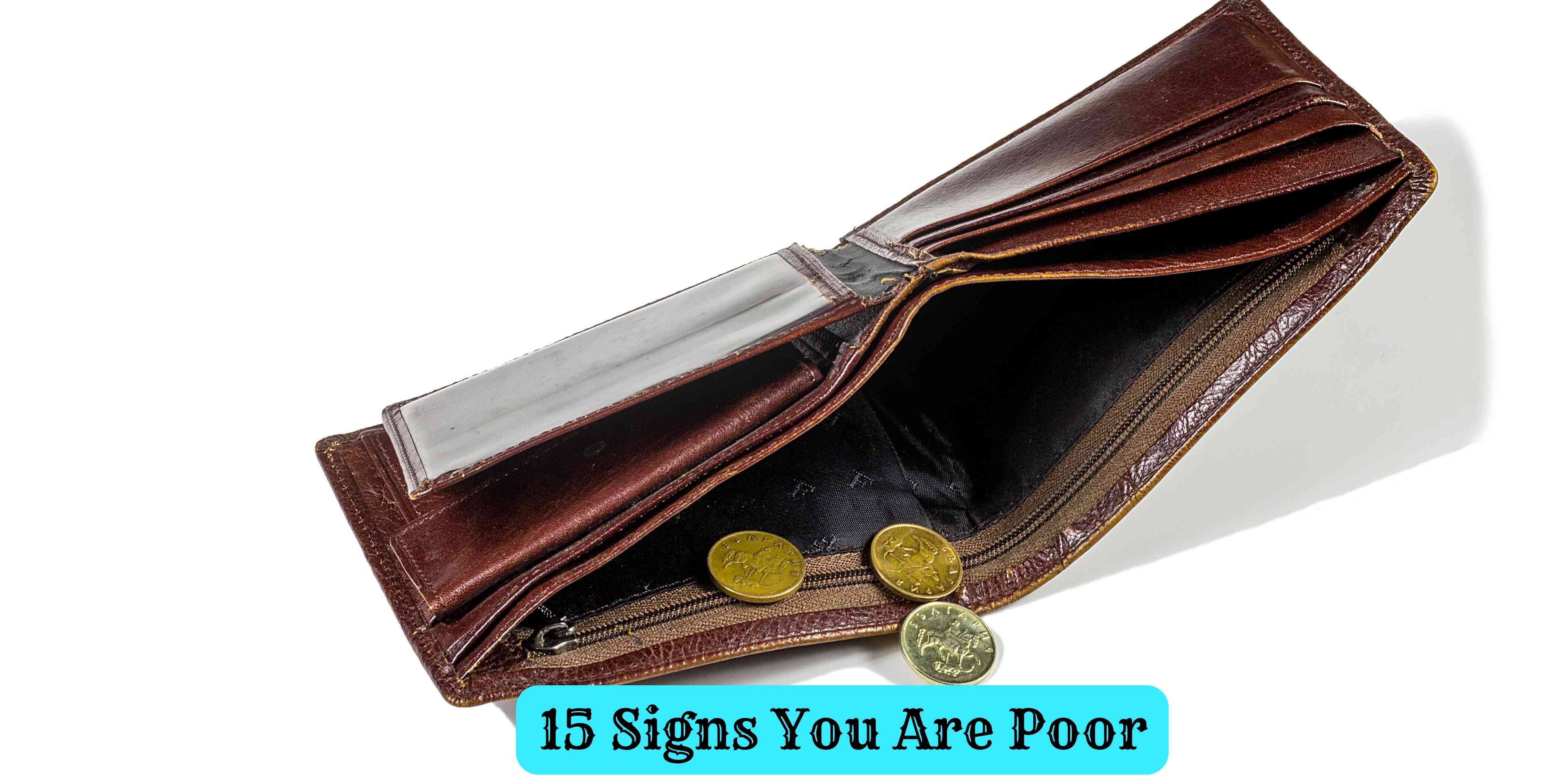
Poverty is defined differently depending on the metric — the federal poverty line, food insecurity, housing instability, inability to cover an unexpected expense — but in practical lived experience, it is characterized by a set of overlapping realities: financial emergencies that happen regularly, difficulty meeting basic needs, dependence on credit for ordinary expenses, and the absence of any financial buffer between current circumstances and crisis. These 15 signs describe what financial poverty actually looks like in daily life.
Financial Emergency Signs
You have no emergency savings. The most basic measure of financial resilience is whether you can cover an unexpected expense — a car repair, a medical bill, a lost paycheck — without going into debt or crisis. Survey data consistently shows that a large proportion of Americans cannot cover an unexpected $400-$1,000 expense from savings. Living without any financial buffer means that any disruption becomes an emergency.
A missed paycheck would be immediately catastrophic. When you are living exactly at the edge of your income — every dollar spoken for before it arrives — there is no margin for anything to go wrong. Missing one paycheck, or facing a reduction in hours, creates an immediate inability to pay rent, utilities, or food. This fragility is one of the defining characteristics of poverty.
You regularly have to choose which bills to pay. Deciding each month which obligations to meet and which to defer — because there isn’t enough money to meet all of them — is a hallmark of financial distress. Bill prioritization is a skill people develop out of necessity when income falls below expenses.
Housing and Basic Needs Signs
Your housing situation is unstable. Frequent moves due to inability to afford rent, living with others due to lack of independent housing options, staying in situations that aren’t safe or suitable because they are affordable, or being regularly behind on rent — these housing instability patterns are both symptoms and causes of poverty, since unstable housing makes it harder to maintain employment and other stabilizing factors.
You regularly worry about food. Food insecurity — not knowing where the next meal is coming from, regularly running out of food before the next paycheck, relying on food banks or assistance programs for access to adequate nutrition — affects tens of millions of Americans and is one of the clearest indicators of poverty.
Utilities are frequently at risk. Electricity, heat, and water being shut off or threatened due to inability to pay, or making regular payments on utility balances that remain overdue, reflects an income that cannot reliably cover basic infrastructure needs.
Work and Income Signs
You work multiple jobs and still can’t get ahead. Holding two or three jobs — often in service, retail, food service, or gig work — without achieving financial stability despite significant work hours reflects wages that fall below what is needed to support a household, particularly in high-cost areas.
Your income is highly variable and unpredictable. Gig work, tipped service jobs, seasonal employment, and part-time positions produce variable income that makes budgeting difficult and financial planning nearly impossible. Income volatility — not just low average income — contributes significantly to the experience of poverty.
You lack access to employer benefits. Working without health insurance, retirement contributions, paid leave, or stable hours is common in lower-wage employment and compounds financial fragility by exposing workers to healthcare costs and retirement insecurity that can be devastating in the longer term.
Spending and Credit Patterns
You rely on high-cost credit for ordinary expenses. Using payday loans, car title loans, or high-interest credit cards for ordinary living expenses — not for significant investments but for groceries, gas, and utility bills — reflects a situation where income is insufficient for basic costs and where access to affordable credit is limited.
You have no access to conventional banking. Being unbanked or underbanked — using check cashing services, money orders, and prepaid debit cards instead of conventional bank accounts — is both a symptom and a cause of financial poverty, as the fees associated with these services extract money that conventional account holders don’t pay.
Your credit is maxed out or nearly maxed out. Running credit cards close to their limit — not for one-time purchases but as an ongoing state — reflects a persistent gap between income and expenses that credit is being used to paper over. Utilization this high also damages credit scores, which then raises the cost of any future borrowing, compounding the original problem.
Health and Future Planning Signs
Healthcare is deferred or avoided due to cost. Skipping recommended medical visits, not filling prescriptions because of cost, or waiting significantly longer than necessary to address health problems because of inability to pay are patterns common in poverty that have significant long-term health consequences.
Retirement feels completely out of reach. Not because of youth but because there is no realistic path to saving for it given current income and expenses. Living without any retirement contribution — not even an employer match that goes uncaptured — means that future financial security depends entirely on Social Security alone, which was not designed to serve as a complete retirement income.
A single medical emergency would be financially devastating. Even when current bills are being paid, having no cushion means that a hospitalization, diagnosis, or accident could erase savings, create years of debt, or force bankruptcy. This exposure exists whether or not a health crisis has actually happened yet — it is a structural vulnerability, not just a response to one.
What to Do Next
The most important practical reality about poverty is that individual choices and individual effort, while relevant, are not the primary determinants of financial outcomes — structural factors including wages, housing costs, healthcare access, educational access, and geographic opportunity play larger roles than conventional narratives about poverty typically acknowledge. That said, within any given situation, the most useful first-order priorities are usually: access to benefits you qualify for but may not be claiming (SNAP, Medicaid, EITC, utility assistance programs), stabilization of housing as the most critical base for other improvements, and identification of income-increasing paths that are actually accessible given current constraints. Emergency savings — even very small amounts — provide meaningful protection against the cascade that a single unexpected expense can trigger when there is no buffer at all.