

13 Reasons Why Online School Is Better Than In-Person
Online school isn't just a pandemic substitute — for the right students, it's genuinely better than in-person. These 13 reasons explain why, organized by the categories of advantage that matter most.
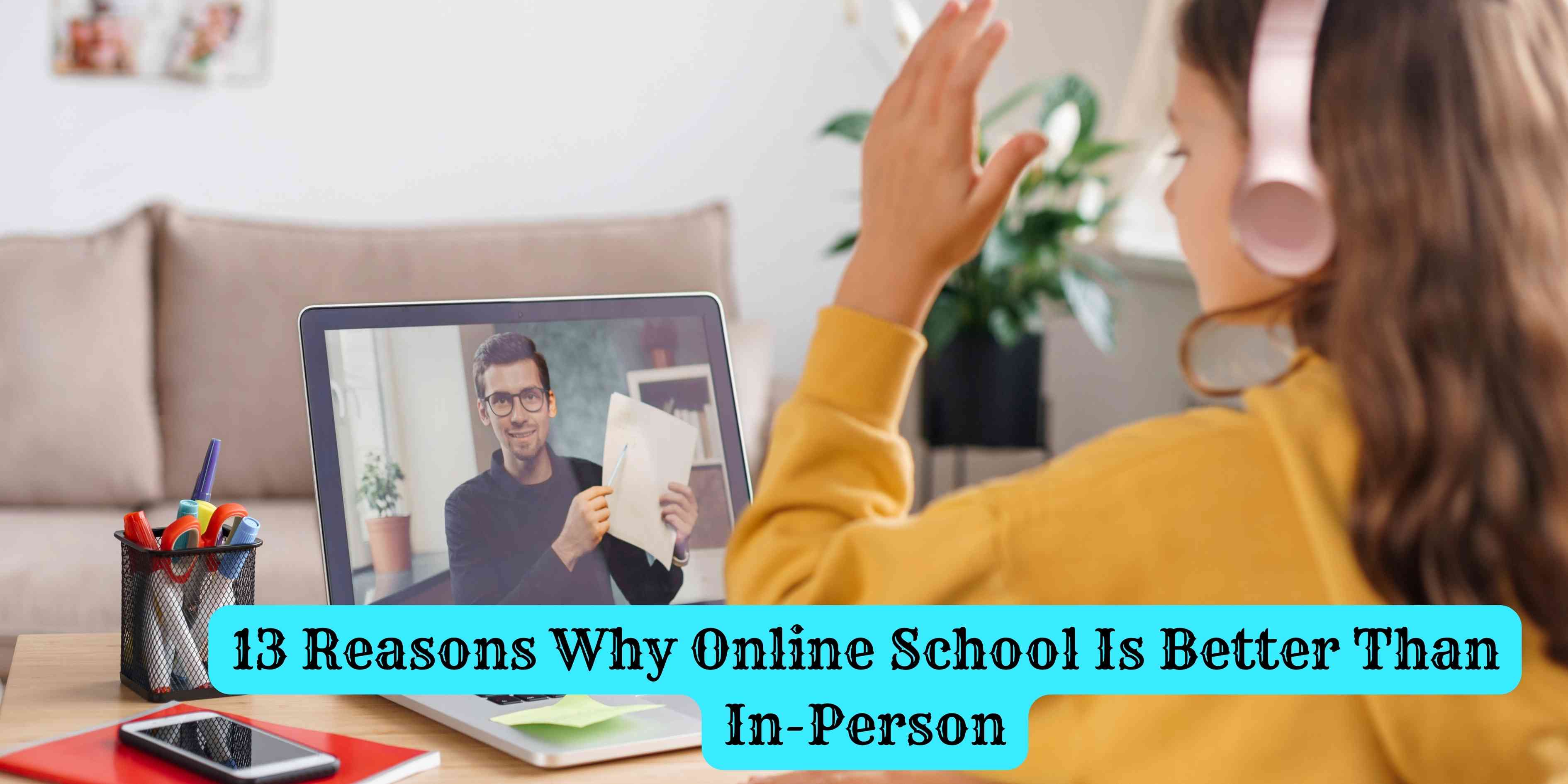
Online education has moved well beyond emergency pandemic instruction into a mature, intentionally designed alternative to traditional schooling. For many students — particularly those with scheduling constraints, health conditions, geographic barriers, learning differences, or specific educational goals — online school offers genuine advantages over in-person instruction. The 13 reasons below are organized by the type of advantage they represent: flexibility, accessibility, learning environment, cost, and life practicality.
Flexibility Advantages
1. You can set your own schedule. Most online programs offer asynchronous instruction — recorded lectures, self-paced assignments, and flexible test windows — that allow students to learn when they are most alert and productive rather than when the bell schedule dictates. Night owls, early risers, and students with shifting weekly schedules all benefit from instruction that doesn’t require being somewhere specific at a specific time.
2. You can accelerate or go at your own pace. Online courses often allow students to move through material more quickly when they understand it and to take more time when they need it. This is fundamentally different from traditional classroom pacing, which moves as a group regardless of individual readiness. Students who are ahead can finish courses early; students who need more time are not forced to move on before they’re ready.
3. You can attend from anywhere. For students who move frequently, live in rural areas far from good schools, travel for competitive sports or performing arts, or live in countries where their native-language schooling options are limited, online school removes geographic constraints entirely. The school comes to you.
Accessibility Advantages
4. It serves students with health conditions and disabilities. Students with chronic illness, immunocompromising conditions, anxiety disorders, sensory sensitivities, or physical disabilities that make traditional school environments difficult or impossible can access education that would otherwise be unavailable to them. Online school is not a lesser substitute for these students — it is often genuinely more appropriate.
5. It eliminates bullying and social pressure as environmental factors. Students who have experienced bullying, social anxiety, or unsafe school environments often perform significantly better in online settings where the classroom social dynamics are absent. The ability to learn without navigating difficult social environments is a meaningful academic and psychological benefit for students who struggle in traditional peer settings.
6. It is accessible to working students and parents. High school and college students who work significant hours, parents who are returning to education, and adults managing caregiving responsibilities can access education that traditional scheduling makes impossible. Online education serves the broadest range of life circumstances rather than only the circumstances for which traditional school was designed.
Learning Environment Advantages
7. Students control their learning environment. Temperature, noise level, seating, lighting, music, breaks, snacks — all of these variables affect concentration and learning, and online school allows each student to optimize them for their own learning needs. A student with sensory sensitivities who cannot focus in a noisy classroom may focus extremely well in a controlled home environment.
8. Recorded content can be reviewed. Unlike live instruction that passes whether or not you absorbed it, recorded online lectures can be paused, rewound, and reviewed as many times as needed. This single feature dramatically changes the learning experience for students who process information more slowly, who have auditory processing differences, or who simply want to review a confusing concept before moving on.
9. Access to a broader range of courses. Online students can access specialized courses that no single physical school could offer: advanced courses in less common subjects, courses in languages not taught at local schools, dual enrollment college courses, and electives in specific professional skills. Smaller schools in particular are limited by teacher availability and enrollment size; online programs eliminate these constraints.
Cost Advantages
10. Eliminates commuting costs and time. Transportation to and from school — by car, bus, or carpool — represents real time and money. Online students save both. For families managing transportation challenges, this is a practical advantage that affects whether school attendance is sustainable.
11. Lower tuition for many online programs. Online community colleges, degree programs, and accredited online high schools often cost significantly less than in-person equivalents, particularly at the college level where room and board represent a large portion of the total cost of attendance.
Practical and Life-Skill Advantages
12. Develops self-discipline and time management. Online school requires students to structure their own time, manage their own pace, and take responsibility for their learning in ways that traditional school — with its bells, attendance requirements, and moment-to-moment supervision — does not. Students who succeed in online environments often develop these skills deliberately rather than having them produced by external structure. These are the skills that define professional success in remote and knowledge-work environments.
13. Prepares students for modern professional environments. Remote and hybrid work is now a permanent feature of professional life across many industries. Students who have spent years learning to manage time independently, communicate digitally, and produce results without in-person supervision enter the workforce having already practiced skills that many older workers are still developing. Online school is not just education — it is training for the way a large portion of modern professional life actually works.
Online school is not better for every student in every situation — peer social development, hands-on learning, and extracurricular activities are genuine advantages of in-person schooling that online programs struggle to replicate. But the claim that online school is inherently inferior misses the categories of students for whom it is genuinely and significantly better.