

100 Ways to Boost Your Confidence
Confidence is not a fixed personality trait — it is built through repeated actions, habits, and practices. These 100 ways give you a complete toolkit for building genuine self-confidence.
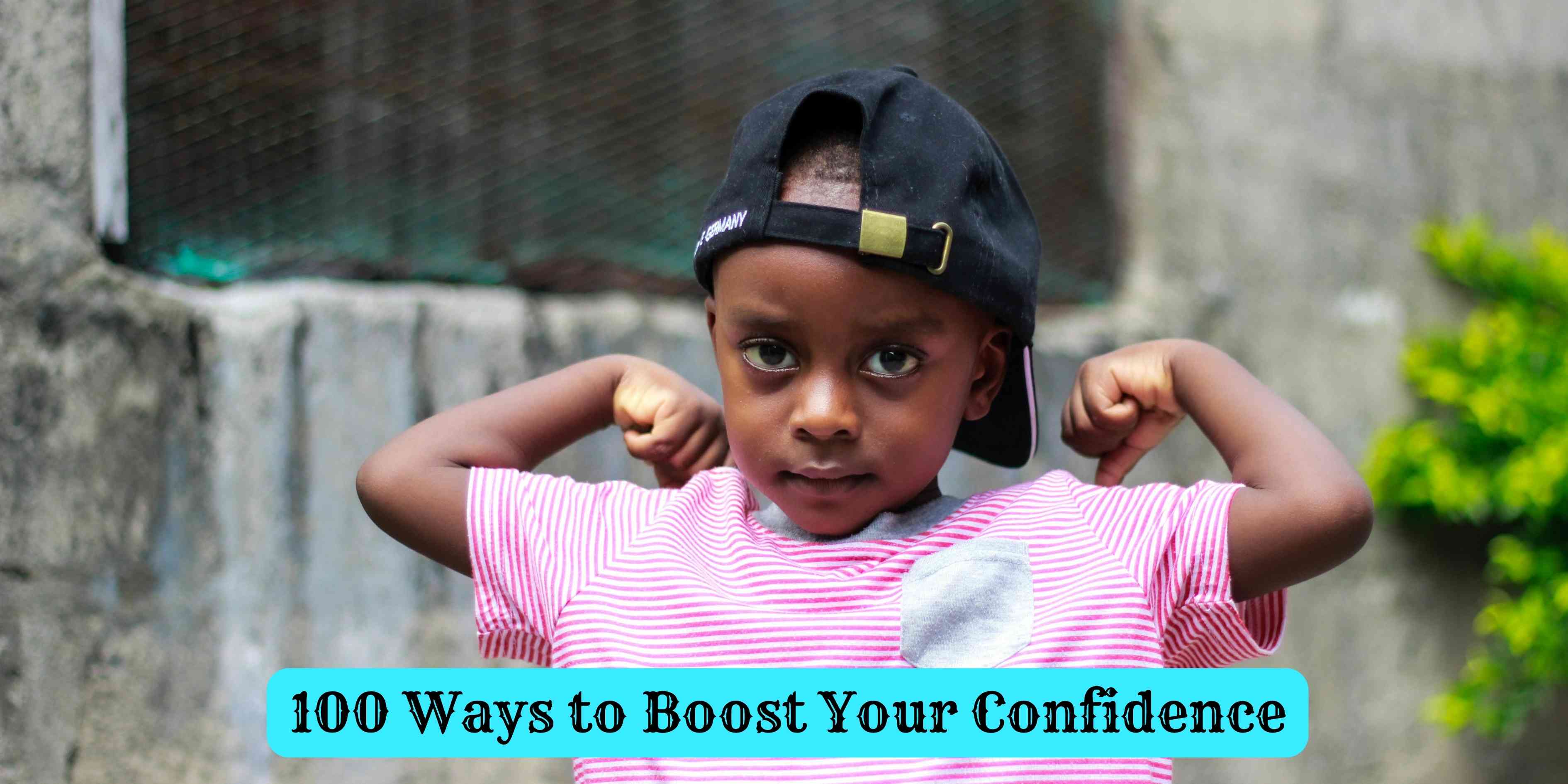
Confidence is not something you either have or don’t have — it is something you build through consistent action, small wins, and deliberate practice. It grows when you do things despite uncertainty, when you keep promises to yourself, and when you develop real competence in areas that matter to you. Research in psychology distinguishes between authentic confidence — built on genuine competence and self-knowledge — and performed confidence, which is fragile. The 100 strategies below build the real kind.
Your Body and Physical Presence (Ways 1–13)
1. Stand up straight — posture sends signals to both your brain and others about your state. 2. Make deliberate eye contact in conversations. 3. Walk at a purposeful pace rather than shuffling or rushing. 4. Exercise regularly — physical fitness is one of the most reliable confidence builders documented in research. 5. Get enough sleep — sleep deprivation reliably undermines emotional regulation and self-perception. 6. Eat in ways that give you energy rather than drain it. 7. Take up physical space appropriately — sitting and standing in open rather than closed postures. 8. Speak at a measured pace rather than rushing words out of anxiety. 9. Lower your voice pitch slightly when speaking — slower, lower speech is perceived as more confident. 10. Breathe deeply before high-stakes situations — physiological calming reduces anxiety and improves performance. 11. Practice a firm handshake. 12. Dress in a way that makes you feel good about yourself. 13. Smile genuinely in social situations — the body and emotion influence each other bidirectionally.
Your Mindset and Inner Dialogue (Ways 14–26)
14. Notice your self-talk — write it down for one day to see the actual patterns. 15. Replace “I can’t do this” with “I haven’t figured this out yet.” 16. Practice self-compassion using the same tone you’d use with a good friend. 17. Stop comparing your inside to other people’s outside. 18. Accept compliments without deflecting — a simple “thank you” is the confident response. 19. Identify the cognitive distortions in your negative self-talk — catastrophizing, mind-reading, all-or-nothing thinking. 20. Keep a record of evidence that contradicts your worst self-assessments. 21. Develop an accurate self-assessment — neither inflated nor deflated — based on actual evidence. 22. Reframe failure as information rather than verdict. 23. Practice self-affirmations that are specific and believable, not vague and grandiose. 24. Reduce the amount of time you spend replaying social situations. 25. Allow yourself to be wrong without it defining your worth. 26. Distinguish between your performance and your identity — you can do poorly at something without being a failure.
Your Skills and Competence (Ways 27–38)
27. Get genuinely good at something that matters to you — competence is the most durable source of confidence. 28. Learn a new skill from scratch — the process of going from zero to functional builds the belief that you can learn. 29. Read broadly — knowledge about many subjects builds the groundedness to contribute to many conversations. 30. Take a public speaking or communication course. 31. Develop expertise in your professional or academic field deliberately. 32. Practice the skill you find most intimidating until it becomes familiar. 33. Teach something you know to someone else — explaining builds mastery. 34. Build a skill outside your comfort zone — something you consider “not like you.” 35. Complete a physical challenge — a race, a hike, a martial arts class. 36. Learn a musical instrument, a language, or a technical skill with a long learning curve. 37. Pursue a creative skill — writing, drawing, photography, cooking. 38. Build your financial literacy — competence with money reduces a significant source of background anxiety.
Your Relationships and Social Life (Ways 39–51)
39. Invest in friendships with people who genuinely support you. 40. Distance from relationships that consistently make you feel worse about yourself. 41. Practice being fully present in conversations — put the phone away, listen actively. 42. Initiate social contact rather than always waiting. 43. Introduce yourself first in group situations. 44. Ask questions that show genuine interest in others. 45. Join a club, team, or group organized around a shared interest. 46. Say what you actually think in conversations rather than performing agreement. 47. Practice disagreeing respectfully — it builds self-trust and earns real respect. 48. Set and maintain boundaries in relationships — each boundary you keep strengthens self-respect. 49. Stop apologizing for things that don’t require apology. 50. Find a mentor in an area where you want to grow. 51. Invest in a relationship with a therapist or counselor if you’re working through significant self-esteem issues.
Your Daily Habits and Routines (Ways 52–63)
52. Establish a morning routine that sets a positive tone for the day. 53. Keep small promises to yourself — every kept commitment builds self-trust. 54. Reduce social media use to the amount that actually adds value. 55. Journal regularly — self-reflection builds self-knowledge, which builds self-trust. 56. Spend time outdoors — exposure to nature reduces anxiety and improves mood. 57. Reduce alcohol and substances — these reliably undermine authentic confidence over time. 58. Build a sustainable sleep schedule. 59. Practice meditation or mindfulness — reducing reactivity builds emotional stability. 60. Declutter your physical space — order in the environment influences mental state. 61. Reduce news consumption to what’s useful and limit doomscrolling. 62. Spend less time with people who drain you and more with people who energize you. 63. Create a consistent end-of-day review — three things that went well builds positive attention habits.
Your Goals and Accomplishments (Ways 64–75)
64. Set specific, achievable short-term goals and complete them. 65. Keep a record of your accomplishments — reviewing it on hard days is useful. 66. Break large goals into concrete next steps — progress builds momentum. 67. Celebrate small wins, not just large achievements. 68. Define your own success criteria rather than inheriting someone else’s. 69. Pursue goals that align with your actual values rather than what looks impressive to others. 70. Revisit goals you abandoned — sometimes unfinished things reduce confidence more than trying and failing. 71. Do one thing each week that is specifically designed to build toward a significant goal. 72. Tell someone accountable about a goal — social commitment increases follow-through. 73. Track progress visually — a simple chart of any metric showing growth is motivating. 74. Reflect on how far you’ve come, not just how far you have to go. 75. Make decisions rather than deferring indefinitely — action, even imperfect, builds agency.
Your Appearance and Environment (Ways 76–88)
76. Wear clothes that fit and feel good — not expensive, just appropriate and comfortable. 77. Develop a grooming routine that makes you feel prepared. 78. Organize your workspace in a way that reflects the person you want to be. 79. Surround yourself with objects and images that reflect your values and aspirations. 80. Reduce your exposure to media and advertising that systematically undermines your self-image. 81. Develop a signature — something about your appearance that feels distinctly yours. 82. Keep your living space clean enough that you feel good coming home to it. 83. Invest in one quality item in an area that matters to you rather than many cheap ones. 84. Reduce clutter in both physical and digital environments. 85. Create spaces in your life for the activities that build your confidence. 86. Display evidence of your accomplishments — certificates, photos, meaningful objects — where you’ll see them. 87. Take care of physical health proactively rather than reactively. 88. Address things you’ve been putting off — each item on the procrastination list slightly reduces confidence.
Small Courageous Acts (Ways 89–100)
89. Do one thing each week that makes you slightly uncomfortable. 90. Ask for something you want rather than waiting to be offered it. 91. Share an opinion in a meeting or class. 92. Introduce yourself to someone you don’t know. 93. Audition, apply, or sign up for something you’re not sure you’re qualified for. 94. Tell someone something true that is easier not to say. 95. Try something you’re not good at in front of other people. 96. Say no to a request you would normally agree to out of guilt or people-pleasing. 97. Ask for help when you need it rather than struggling silently. 98. Share creative work — writing, art, music — before you feel it’s perfect. 99. Apologize genuinely when you are wrong, and mean it.
100. Do something today that the version of yourself you want to become would do. The distance between the person you are and the person you want to be is crossed not in a single transformation but in the accumulation of small acts — each one a tiny vote for the person you’re becoming. Confidence is not a destination you reach; it is a practice you maintain, built one small courageous action at a time. The 100th way is simply to start: pick one thing on this list, do it today, and then do the next one tomorrow.