

10 Research Opportunities for High School Students
High school students can build research experience through labs, competitions, mentorship, community projects, and independent study.
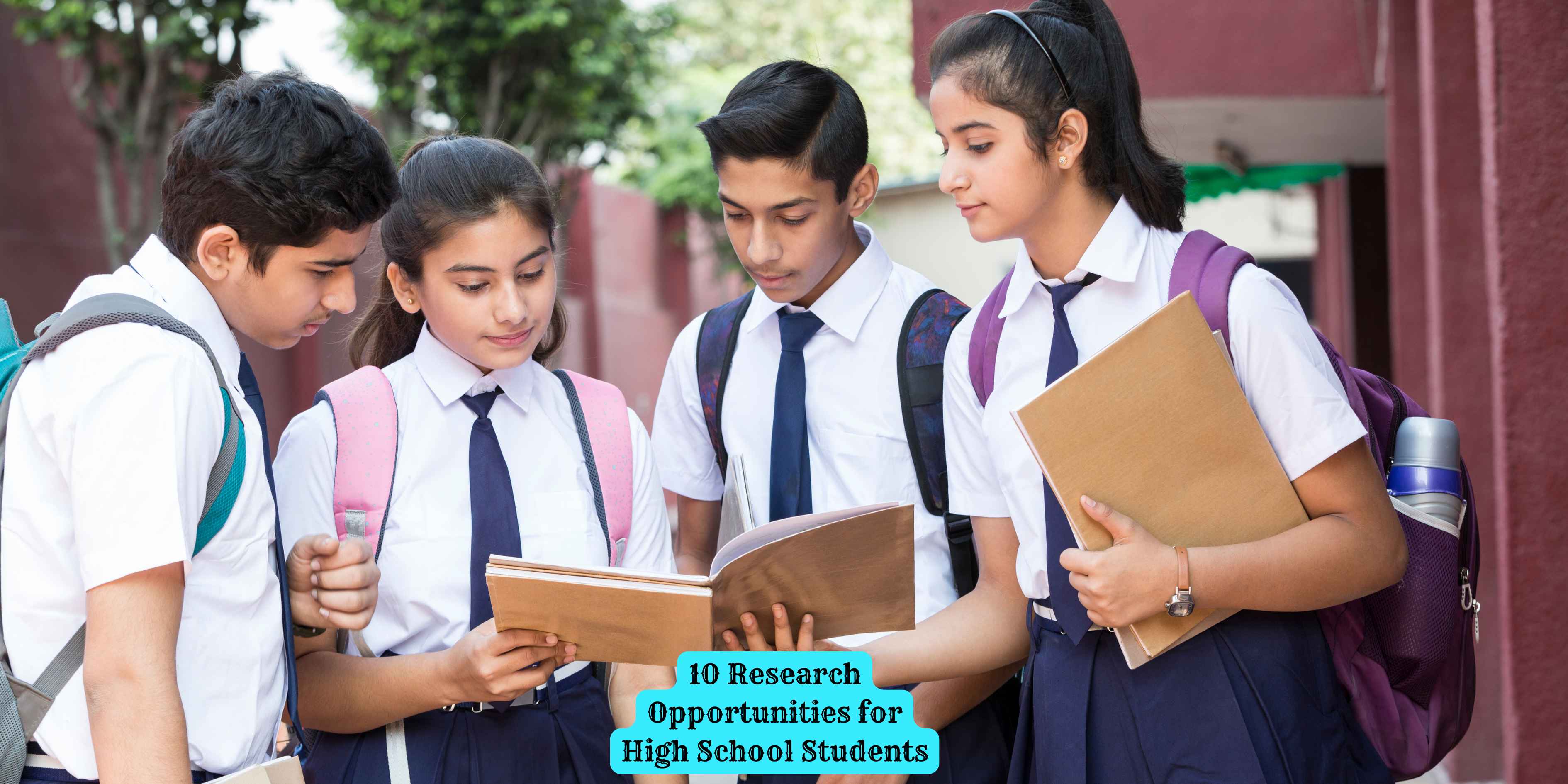
High school students can find research opportunities through university summer programs, science fairs, local colleges, hospitals, museums, nonprofits, online mentorship, independent projects, community data work, and school-based research clubs.
Research is not only for students with access to elite labs. A strong project can begin with a clear question, careful methods, honest data, and a mentor who helps the student think critically.
The best high school research opportunity is one that teaches the student how to ask better questions and test ideas responsibly.
1. University Summer Research Programs
Many universities offer summer research programs for high school students. These programs may place students in labs, seminars, fieldwork, or guided project groups.
They can be competitive and sometimes expensive, so students should read eligibility rules carefully. Look for programs that provide real mentorship, clear project expectations, and financial aid if needed.
2. Local College Mentorship
Students can contact professors, graduate students, or community college faculty whose work matches their interests. A polite email can ask whether the student may learn about the research, volunteer, or receive guidance on an independent project.
The email should be short, specific, and respectful. Mention the topic, why it interests you, what you have already done, and what kind of help you are seeking.
3. Science Fairs
Science fairs are one of the most accessible ways to conduct research. Students choose a question, design a method, collect data, analyze results, and present findings.
Good science fair topics do not need to be flashy. A simple project with strong design is better than a dramatic project with weak evidence.
4. Independent Research Projects
Independent research can happen at home, school, a library, or in the community. Students might study plant growth, local water quality, public data, reading habits, traffic patterns, or historical documents.
The key is to use a clear research question and ethical methods. If people are involved, students should ask a teacher or mentor about consent, privacy, and safety.
5. School Research Clubs
Some schools have science research classes, debate research teams, robotics groups, environmental clubs, history clubs, or student journals. These can help students practice research in a structured setting.
If your school does not have a research club, start small. A teacher-sponsored group can meet monthly to discuss project ideas, methods, sources, and presentation skills.
6. Hospitals and Health Organizations
Students interested in medicine or public health may look for volunteer or research-adjacent programs at hospitals, clinics, universities, or health nonprofits.
High school students may not be allowed to handle sensitive patient data or clinical tasks, but they may help with education, outreach, literature reviews, or supervised projects.
For health topics, students should use reliable sources and avoid giving medical advice.
7. Museums, Libraries, and Archives
History, art, literature, anthropology, and social science students can explore research through museums, libraries, and archives. Projects may involve oral history, local newspapers, photographs, maps, letters, or public records.
This is a strong path for students who enjoy writing, culture, law, politics, or storytelling.
8. Environmental Field Research
Environmental research can happen in parks, rivers, neighborhoods, school gardens, or local conservation groups. Students might track invasive plants, litter patterns, air quality, biodiversity, soil conditions, or water health.
This connects well with topics such as biodiversity and environmental science careers.
9. Data and Coding Projects
Students who like math or computer science can use public datasets to research questions about education, climate, sports, economics, transportation, or public health.
Data projects teach statistics, visualization, coding, and interpretation. The most important skill is explaining what the data can and cannot prove.
10. Community-Based Research
Community research studies real problems in a local area. Students might examine food access, library use, school transportation, recycling, tutoring needs, or public park access.
This kind of research can lead to service projects, presentations to school boards, or local improvement ideas.
Practical Takeaway
High school research opportunities are available in many forms. Students can join formal programs, ask for mentorship, enter competitions, analyze public data, or design careful independent projects.
Start with a question you genuinely care about, find a mentor, keep records, and focus on learning the research process.