

10 Reasons Why I Stopped Intermittent Fasting
Intermittent fasting has genuine benefits — but it also has real drawbacks that don't get discussed enough. These ten reasons explain why IF stopped being the right approach.
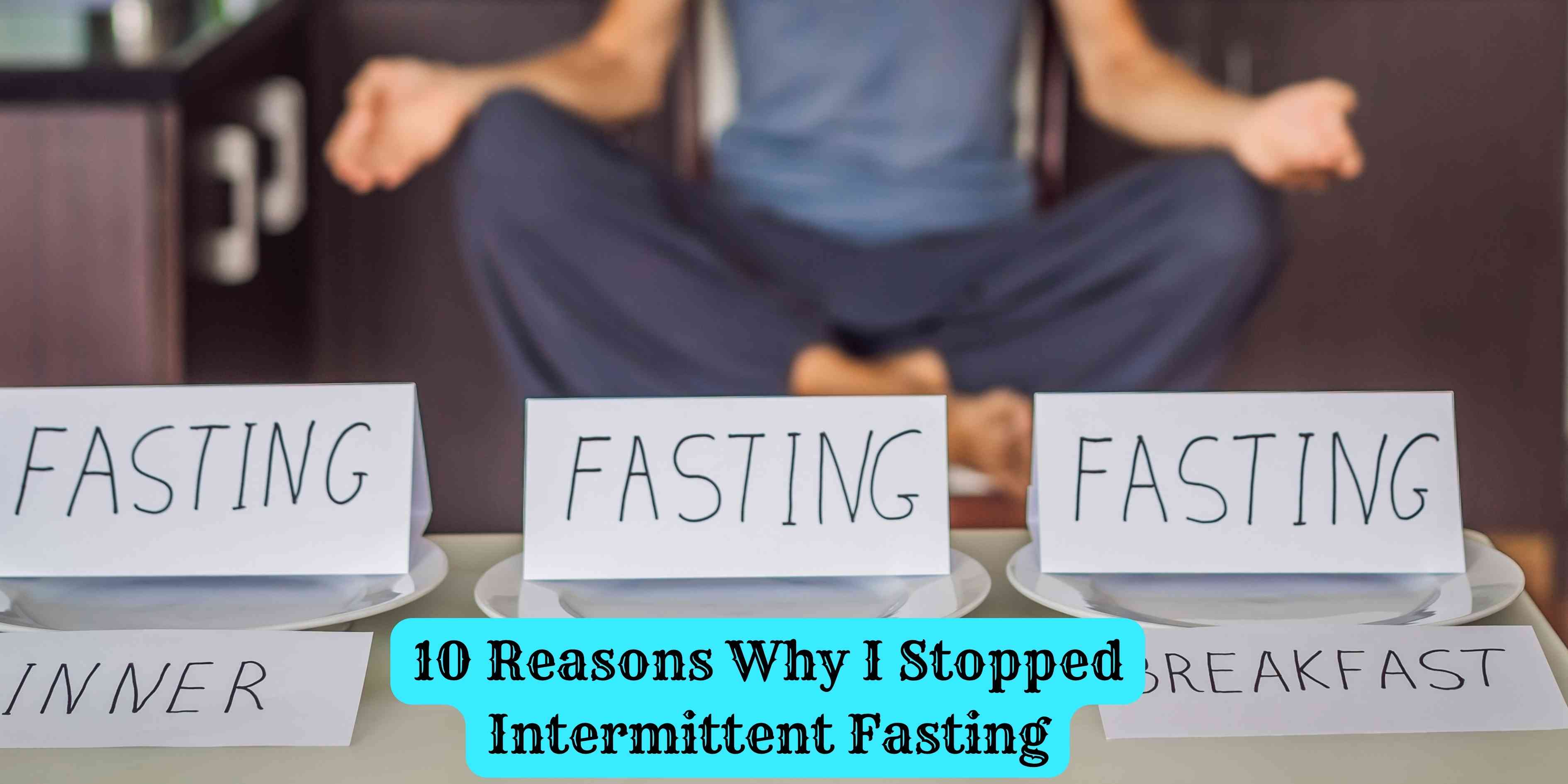
Intermittent fasting (IF) — the practice of restricting eating to specific time windows, most commonly 16:8 (16 hours fasted, 8 hours eating) or 5:2 (five normal days, two very restricted days) — has genuine scientific support for weight management, metabolic health, and other benefits. It works for many people. It also does not work for many people, or works initially and then produces enough problems to outweigh the benefits. These ten reasons reflect the real experience of people who have tried IF and ultimately stopped — alongside the physiology behind why these problems occur.
1. Chronic Hunger Made Everything Worse
The core promise of intermittent fasting is that hunger normalizes over time and fasting periods become comfortable. For many people, this happens. For others — particularly those who are active, who have smaller bodies, or who have hormonal profiles that make appetite strongly responsive to restriction — hunger during fasting windows remains a persistent, distracting presence that degrades concentration, mood, and willpower across the entire day. Chronic hunger is not just uncomfortable; it reduces decision-making quality and eventually makes adherence unsustainable.
2. It Disrupted Sleep
Eating patterns significantly affect sleep quality, and for some IF practitioners, the eating window timing creates sleep problems. People who use morning eating windows (eating early in the day and stopping by afternoon) may experience early-morning hunger that disrupts sleep before the next morning’s first meal. People who use later eating windows (skipping breakfast and eating from midday through evening) often find themselves too full when bedtime arrives, with digestion interfering with sleep quality. The incompatibility between IF timing and sleep quality is a commonly reported but underacknowledged problem.
3. It Caused Muscle Loss
Intermittent fasting in a caloric deficit — which is how most people use it to lose weight — reduces muscle mass if protein intake and resistance training are not deliberately optimized. The extended fasting period (particularly 18-24 hour fasts) reduces protein synthesis and can tip the body toward muscle catabolism, especially in active individuals who need sustained protein delivery across the day. People who lift weights seriously often find that their strength and muscle mass decline on aggressive IF protocols relative to eating distributed across the day, even at identical total caloric intakes.
4. It Created an Obsessive Relationship with Food
For individuals with a history of disordered eating, perfectionist tendencies, or food anxiety, structured eating rules like intermittent fasting can amplify unhealthy thinking patterns. The rigidity of a defined eating window can produce anxiety when the window must be violated (social situations, travel, illness), guilt disproportionate to the actual impact of eating outside the window, and an intensifying preoccupation with food and eating times that worsens rather than normalizes the relationship with food. IF can be a trigger for disordered eating patterns in susceptible individuals.
5. Social Life Became Inconvenient
Food is social. Breakfast meetings, lunch with coworkers, early-morning coffee with friends, midday birthday celebrations — many of the social occasions that food anchors fall outside the eating window of common IF protocols. Repeatedly declining food at social occasions, asking restaurants to accommodate unusual timing, or explaining dietary restrictions in social contexts creates friction that compounds over time. The social cost of intermittent fasting is rarely discussed in promotional accounts of the practice and is genuinely significant for people whose social lives involve frequent shared meals.
6. Training Performance Declined
Working out in a fasted state — which IF protocols often require for people who train in the morning — reduces performance in strength training and high-intensity exercise. Glycogen depletion during fasted training limits power output, concentration, and recovery. People who train seriously for performance rather than just general health often find that their performance markers (strength, endurance, output) decline measurably on IF protocols, which erodes motivation and undermines the athletic results that training is supposed to produce.
7. The Benefits Plateaued After an Initial Period
Many people who try intermittent fasting experience significant early results — rapid initial weight loss, improved energy, reduced bloating — that then plateau after 8-12 weeks. The plateau reflects metabolic adaptation: the body adjusts to the new eating pattern, and the initial advantages diminish. At this point, people are maintaining an eating pattern that restricts their schedule and social life, with declining additional benefit, while also facing the question of whether to further restrict or simply continue with diminishing returns.
8. It Masked Hunger Signals Rather Than Resolving Them
The long-term goal of healthy eating should be learning to eat in response to genuine hunger and fullness signals — a skill known as intuitive eating. Intermittent fasting trains people to ignore hunger signals for extended periods, which can impair rather than improve the ability to recognize and respond to genuine hunger. People who practice IF long-term sometimes find that their hunger signals have become disconnected and unreliable — they feel hungry outside the window and not hungry inside it, in patterns that do not track actual nutritional need.
9. Hormonal Effects Were Negative for Some People
Research on IF’s hormonal effects has found that for some women, extended fasting triggers or worsens disruptions to the hypothalamic-pituitary axis — the hormonal signaling system that regulates the menstrual cycle, thyroid function, and adrenal response. Some women report menstrual irregularity, worsened PMS, increased anxiety, and thyroid symptoms after beginning aggressive IF protocols. Men can also experience testosterone disruption with extended or very aggressive fasting. These effects vary significantly by individual, but they represent a genuine negative outcome for a subset of IF practitioners.
10. Simply Eating Less and Better Worked Just as Well
The largest practical objection to intermittent fasting as a long-term dietary strategy is the evidence that it does not produce meaningfully superior outcomes compared to simple, consistent caloric restriction without time constraints. Meta-analyses comparing IF to continuous caloric restriction have generally found similar outcomes for weight loss, metabolic markers, and adherence over time. For people who found IF produced negative side effects or social friction, the discovery that an approach without those drawbacks produces equivalent results is a compelling reason to stop. The best dietary approach is the one that is sustainable long-term without causing harm — and for many people, that is simply balanced eating within a caloric budget, without clock-watching.