

10 Reasons to Trust God With Bible Verses
Trust is difficult when circumstances are hard. These 10 reasons — each grounded in Scripture — explain why Christians believe God is trustworthy even when trust is costly.
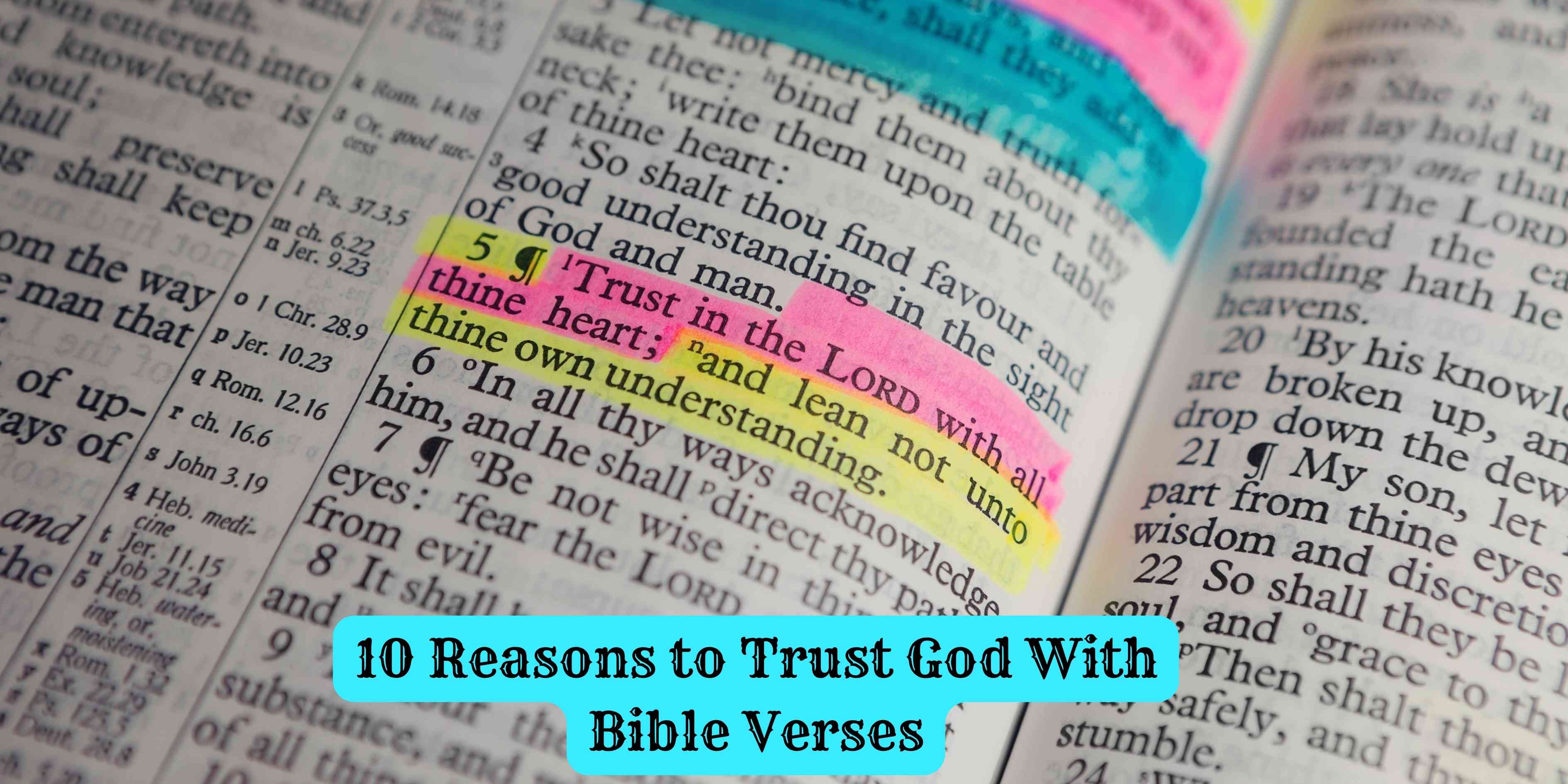
Trust in God is not blind — it is grounded in the character of God as revealed in Scripture, in the historical record of God’s faithfulness, and in the testimony of those who have trusted him across difficult circumstances. The Bible does not promise that trusting God will make life easy. It promises that God is faithful, that his purposes are good, and that those who trust him are held in ways that transcend present circumstances. These 10 reasons explain why Christians trust God, with the Scripture that grounds each.
1. God Is Faithful and Does Not Change
Lamentations 3:22-23 declares: “The steadfast love of the Lord never ceases; his mercies never come to an end; they are new every morning; great is your faithfulness.” Unlike human beings whose reliability fluctuates with circumstance and mood, God’s character and faithfulness are presented in Scripture as unchanging — the same yesterday, today, and forever (Hebrews 13:8). Trust in a person requires trust in their consistency; Scripture grounds trust in God in his immutable character.
2. God Knows What We Need Before We Ask
Matthew 6:8 records Jesus saying that “your Father knows what you need before you ask him.” This is a reason for trust rather than anxiety — the God to whom we pray is not uninformed about our circumstances, does not need to be convinced of their urgency, and is not waiting for precisely the right words before caring about them. He already knows.
3. God Works All Things Together for Good
Romans 8:28 is among the most cited and most tested verses in the New Testament: “And we know that God causes all things to work together for good to those who love God, to those who are called according to His purpose.” This is not a promise that all things are good but that God works through all things — including suffering and hardship — toward purposes that are ultimately good. It is a reason to trust in the darkness when outcomes are unclear.
4. God’s Plans Cannot Be Thwarted
Job 42:2 declares: “I know that You can do all things, and that no purpose of Yours can be thwarted.” Isaiah 46:10 records God saying, “My purpose will be established, and I will accomplish all My good pleasure.” The sovereignty of God — his capacity to accomplish what he intends — is itself a ground for trust. Trusting someone whose plans can be frustrated is different from trusting the one whose purposes are ultimately sure.
5. God Is Near to the Brokenhearted
Psalm 34:18 states: “The Lord is near to the brokenhearted and saves those who are crushed in spirit.” This is not a reason to trust God because everything will go well, but because God is present precisely in the moments when it doesn’t. The God of Scripture is not distant from human suffering — he is close to it. That proximity is itself a reason for trust.
6. God Provides
Philippians 4:19 promises: “And my God will supply all your needs according to His riches in glory in Christ Jesus.” The context is Paul writing from prison, having experienced both abundance and need, and testifying to a God who had been sufficient through both. The promise is not unlimited material prosperity but that the God who owns everything is able and willing to meet genuine need.
7. Cast Your Anxieties on Him Because He Cares
First Peter 5:7 instructs: “Cast all your anxiety on him because he cares for you.” Trust follows from caring. A God who is indifferent to human wellbeing would not merit the kind of trust Scripture calls for. The active care of God for those who belong to him — demonstrated most fully in the incarnation and the cross — is the deepest foundation for trust.
8. God’s Ways Are Higher Than Ours
Isaiah 55:8-9 records God saying: “For my thoughts are not your thoughts, neither are your ways my ways… as the heavens are higher than the earth, so are my ways higher than your ways and my thoughts than your thoughts.” This is a reason for trust precisely when God’s actions or allowances are incomprehensible. The argument is not blind deference but the recognition that a being of infinite knowledge and goodness can be trusted even when his actions exceed our understanding.
9. God Has Demonstrated His Love in the Cross
Romans 5:8 states: “But God demonstrates His own love toward us, in that while we were yet sinners, Christ died for us.” The cross is the definitive argument for God’s trustworthiness. A God who would give his own Son at the cost he paid has already demonstrated the depth of his love in terms that exceed rational doubt. Paul’s argument in Romans 8:32 follows from this: “He who did not spare His own Son, but delivered Him over for us all, how will He not also with Him freely give us all things?“
10. Perfect Love Casts Out Fear
First John 4:18 states: “There is no fear in love; but perfect love casts out fear, because fear involves punishment, and the one who fears is not perfected in love.” The reason for trust, ultimately, is love — specifically, the love of God that Scripture presents as the defining characteristic of who God is (1 John 4:8: “God is love”). Trust is the response to love that is real and certain. The believer who has encountered the love of God — in Scripture, in prayer, in the history of his dealings with humanity, and in personal experience — finds in that love the most solid foundation for trust that exists. Fear recedes not because circumstances improve but because love, fully received, displaces it.
The harder version of this question: none of this answers what to do when trust doesn’t feel rewarded — when prayer goes unanswered the way you hoped, or hardship doesn’t resolve on any visible timeline. Scripture doesn’t ask believers to pretend that tension away. It asks them to hold it alongside these reasons rather than letting it cancel them out. For a fuller treatment of why a trustworthy God still permits suffering, see why God allows suffering.
Quick question: Does trusting God mean I shouldn’t feel anxious?
Not quite. First Peter 5:7 says to cast anxiety on God, not that feeling it in the first place is a failure of faith. Anxiety is often a normal signal worth listening to rather than suppressing — anxiety can sometimes be healthy as a response to real circumstances. Trust changes what you do with the anxiety, not whether a person of faith ever feels it.