

10 Reasons to End a Relationship
Knowing when to end a relationship is one of the harder things people face. These 10 reasons describe the situations where staying is consistently the worse choice.
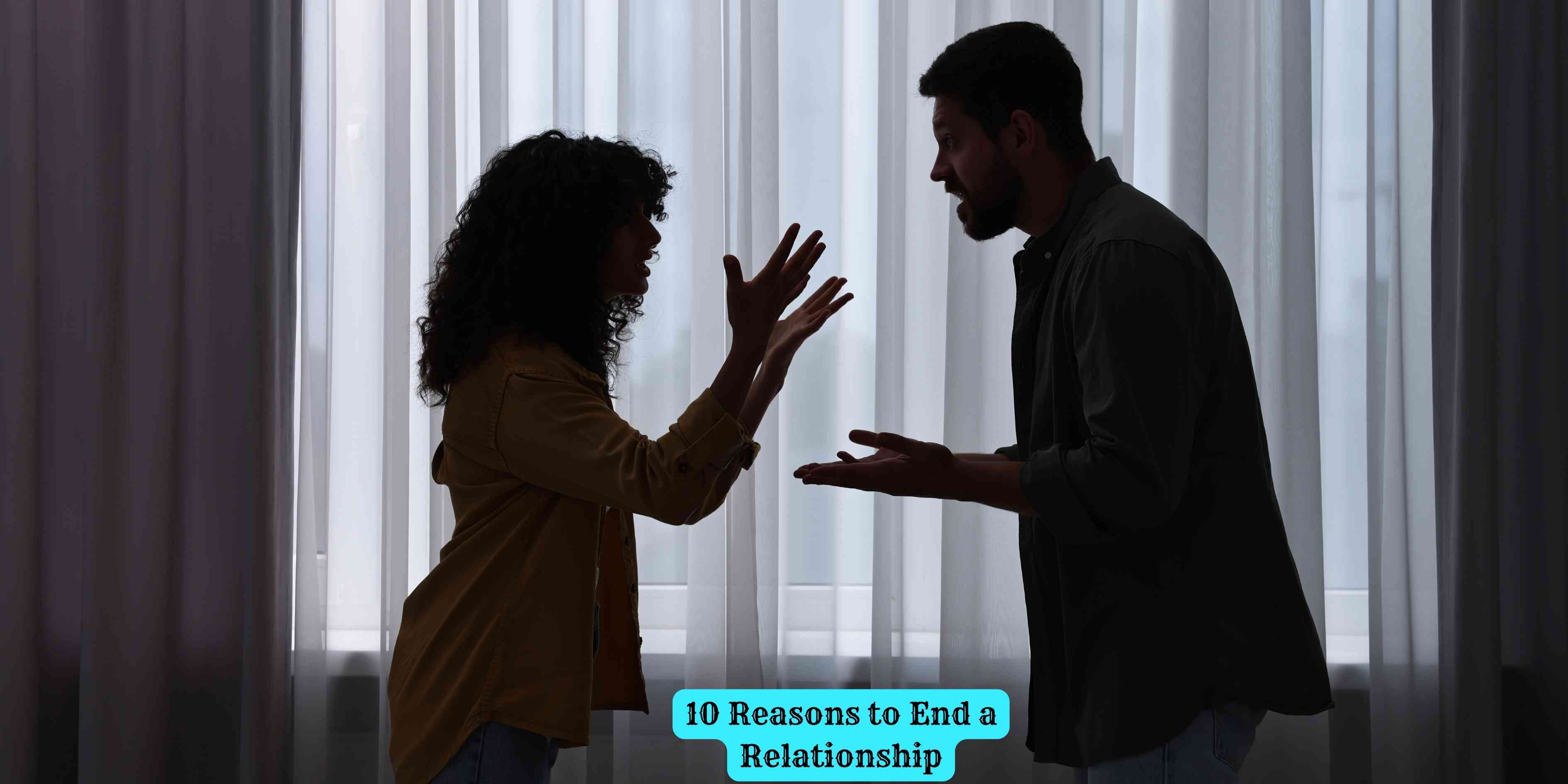
Not every difficult relationship should end, and not every reason on this list is an absolute. But some situations consistently produce the same outcome — staying does not improve things, it just extends them. Knowing which situations those are, and having the honesty to recognize them in your own life, is the beginning of being able to make a genuinely good decision about whether to stay or leave.
1. Any Form of Abuse
This is the most important one and the most absolute: if a relationship involves physical violence, sexual coercion, sustained emotional abuse or manipulation, financial control, or any pattern that causes you genuine harm, ending it is not a choice to weigh against alternatives — it is a safety imperative.
Abuse does not improve because the person promises it will. Cycles of apology and return are a feature of abusive relationships, not evidence that things are genuinely changing. If you are in a relationship that involves any form of abuse, ending it is the right decision, and support is available through the National Domestic Violence Hotline at 1-800-799-7233.
2. Chronic Dishonesty That Has Not Changed
One significant lie that is acknowledged, owned, and not repeated is different from a pattern of dishonesty. When a partner lies consistently — about small things, about big things, about their behavior and intentions — and this pattern does not change despite being addressed, trust has been permanently damaged.
Relationships cannot sustain without trust. When trust is gone and there is no evidence that the conditions for rebuilding it exist — genuine accountability, change in behavior, sustained honesty over time — the relationship has lost its foundation.
3. Incompatible Core Values
Some differences in values can be accommodated — different preferences, different habits, different interests. Core value incompatibilities generally cannot. If you have fundamentally different views about children, religion, monogamy, money, or other deep values that affect daily life and long-term plans, and these differences are genuinely incompatible rather than negotiable, staying tends to produce ongoing conflict or suppression of one person’s values rather than genuine partnership.
These incompatibilities often become visible over time rather than at the start of a relationship, which makes them particularly painful to acknowledge. But naming them clearly is more honest than pretending they are not there.
4. A Consistent Pattern That Has Not Changed Despite Real Efforts to Address It
Every relationship has friction points. The relevant question is whether they are addressable. If you have consistently, genuinely tried to address a specific pattern — through direct conversation, through couples counseling, through sustained effort — and it has not changed, you have gathered real information about what this relationship contains. The expectation that something will change without anything different happening is what keeps people in situations that do not improve.
5. Loss of Basic Respect
Relationships can survive periods of conflict, distance, and difficulty. They are very difficult to sustain after respect has gone. Contempt — the communication of disdain, dismissal, or fundamental disregard for the other person — is one of the strongest predictors of relationship failure, and it is very difficult to reverse once it has become a persistent feature of how two people interact.
If the relationship is characterized by one or both partners consistently treating the other with contempt, dismissal, or disdain — not in conflict moments but as a pattern — respect has been lost in a way that tends not to return.
6. Your Needs Are Consistently Not Met and Communicating About Them Produces No Change
Relationships require that both people’s fundamental needs be met — not perfectly, not always, but in a sustainable way. If you have communicated clearly what you need — emotional availability, honesty, respect, physical affection, quality time — and those needs are consistently unmet with no genuine effort toward change, the relationship is not providing what a relationship needs to provide.
This is different from having needs that are occasionally unmet during difficult periods. It describes a sustained pattern in which your fundamental needs are not regarded as important enough to address.
7. You Feel Worse About Yourself Consistently
A relationship should, on balance, be a place where you feel more capable, more valued, and more yourself than you would alone. If the consistent experience of being in the relationship is feeling diminished, criticized, undermined, or less confident than you are outside it, that is meaningful information.
Some periods in relationships are genuinely hard and produce temporary negative feelings. A persistent pattern in which the relationship is the source of consistent damage to your self-worth is different, and is a reason to take seriously.
8. The Future You Both Want Is Incompatible
One person wants children; the other does not. One wants to stay in one city permanently; the other needs to move for career. One has made a major life commitment — religion, family obligation, career path — that genuinely cannot accommodate the relationship long-term.
Future incompatibilities are not about who is right and who is wrong. They are about two people having real needs and goals that genuinely cannot both be met within the same relationship. Staying past the point where this is clear usually means one person sacrifices something fundamental — which tends to produce resentment over time.
9. You Have Tried Seriously and Nothing Has Changed
Some relationships go through periods of genuine effort — counseling, honest conversation, sustained commitment to change — and nothing meaningfully improves. This is different from giving up at the first sign of difficulty. It describes a real investment of effort that has not produced real results.
When sustained, genuine effort has been made and the relationship is still not working, that is information about the relationship’s capacity rather than a reflection of insufficient effort.
10. You Know It Is Over but Are Staying Out of Fear, Obligation, or Habit
This is the quietest reason and sometimes the most honest. People sometimes know a relationship has ended — feel it clearly, do not want to be in it, are not growing from it — and stay because the alternative is frightening, because leaving feels cruel, because the life built around the relationship feels impossible to unravel.
Fear of the transition, obligation from shared history, and the comfort of familiarity are real forces. They are not, however, good reasons to remain in a relationship that is over. Staying in a relationship that is finished prolongs a situation that needs to end and uses time that could be spent building something better.
Making the decision to end a relationship is difficult regardless of how clear the reasons are. When you are ready to have that conversation, 10 excuses to break up with someone nicely offers guidance on how to do it with honesty and care.