

10 Reasons Not to Microchip Your Dog
Microchipping is widely recommended by vets and animal welfare organizations. But there are legitimate concerns and common objections worth examining honestly before you decide.
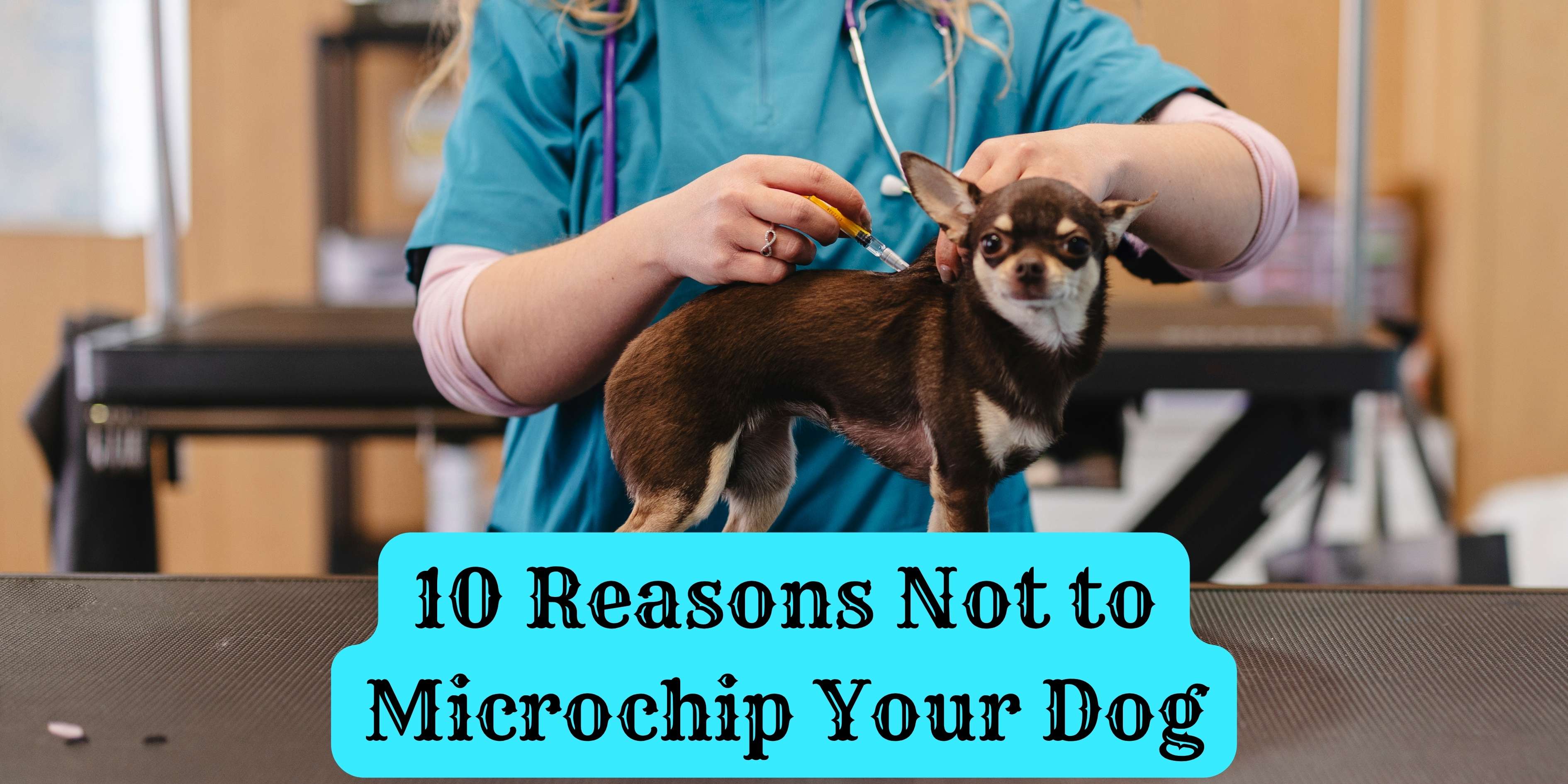
The majority of veterinarians, animal shelters, and pet welfare organizations recommend microchipping dogs. The evidence that microchipping improves the rate of lost dogs being reunited with their owners is clear and substantial. This article presents ten reasons people choose not to microchip — ranging from legitimate medical concerns to common misconceptions — presented fairly so that dog owners can make an informed decision. Note that in some jurisdictions, microchipping is legally required, which supersedes the choice entirely.
1. Fear of the Implantation Procedure
Microchipping involves inserting a small chip (roughly the size of a grain of rice) under the skin between the shoulder blades using a needle slightly larger than those used for standard vaccinations. Some owners are concerned about the pain, stress, or risk this procedure involves for their dog. In practice, the procedure takes seconds, most dogs react no more than they would to a standard vaccine, and it does not require anesthesia. The procedural concern, while understandable, is not generally supported as a significant risk by veterinary evidence.
2. Concerns About Chip Migration
The most commonly reported physical complication of microchipping is chip migration — the chip moving from the original implantation site to another location in the body, sometimes traveling to a shoulder or other area. This can make the chip harder to locate during scanning. Migration rates are generally low when implantation is performed correctly, but it is a real documented phenomenon that can reduce the reliability of finding the chip on a routine scan.
3. Rare Tissue Reactions at the Implant Site
A small number of microchipped animals have developed fibrosarcomas — malignant tumors — at or near microchip implantation sites, primarily documented in cats and ferrets but occasionally in dogs. The causal relationship is disputed — the same type of tumor occurs at other injection sites — and the frequency is extremely rare. However, it is a concern that some owners cite, particularly those with older dogs or dogs with a history of unusual tissue reactions.
4. The “GPS Misconception” — Microchips Don’t Track Location
A significant source of misplaced confidence in microchipping is the misconception that microchips function as GPS trackers. They do not. A microchip is a passive RFID device that stores a registration number and has no power source, battery, or transmission capability. It can only be detected when a scanner is held within a few centimeters of the chip. A lost dog cannot be located using its microchip — the chip only helps identify the dog if it is found and brought to a shelter or vet with a scanner. Owners who believe the chip will help locate their dog if it is taken or wanders far are operating under a false assumption.
5. Incomplete or Outdated Registry Information
A microchip’s value depends entirely on whether the owner has registered the chip number in an accessible database with current contact information. Many microchipped dogs are reunited with owners only if the registration is current, complete, and in a database that can be accessed by the scanning shelter or vet. Studies have found that a significant proportion of microchipped dogs have either unregistered chips or outdated information, rendering the chip useless for identification. The chip itself provides no benefit without diligent registry maintenance — a responsibility many owners do not maintain.
6. Scanner Compatibility Issues
There is no single universal microchip standard. Dogs microchipped in the United States primarily use 125 kHz chips, while the international ISO standard is 134.2 kHz. Not all scanners read all chip frequencies, and a dog with an older non-ISO chip may not be detected by a scanner calibrated for the ISO standard, or vice versa. This interoperability problem has improved significantly with the adoption of universal scanners, but it has not been completely resolved, creating a small but real possibility that a chip goes undetected.
7. The Dog Is Always Closely Supervised
Some owners with dogs that are never off-leash, never allowed outdoors unsupervised, and whose loss risk is considered minimal may feel the additional protection of a microchip adds little value to their specific situation. For dogs in controlled environments — apartment dogs walked on leash, dogs never left in yards, dogs that travel with owners — the risk calculus is different than for dogs with outdoor access and higher escape potential.
8. Concerns About Privacy and Data
A small number of owners have philosophical or practical concerns about having their contact information stored in databases maintained by private companies. Microchip registries are operated by private entities with their own data policies, and there is no single government-run unified registry in most countries. While these concerns are not widely shared and the data stored is limited to contact information for the purpose of pet reunion, they represent a legitimate consideration for privacy-conscious owners.
9. False Confidence Reducing Other Precautions
Some animal welfare advocates have noted that microchipping can produce false confidence — leading owners to take fewer other precautions against loss (secure fencing, collar ID tags, supervision) because they feel the chip provides a safety net. Since a chip requires the dog to be found, brought to a scanner, and the information to be current, it is not a substitute for physical precautions. An ID tag on a collar can allow a neighbor who finds a lost dog to return it immediately — a result that does not require shelters, vets, or scanners at all.
10. Personal or Philosophical Objections to Implanting Foreign Objects
Some owners have personal convictions about implanting foreign objects into their animals’ bodies, or prefer management approaches that do not involve permanent physical modification. These objections are legitimate individual choices, though they should be weighed against the documented evidence that microchipping substantially increases the rate of lost dogs being successfully reunited with their families — a benefit that the objections above, when examined, do not substantively outweigh in most cases.
Whether or not to microchip is ultimately a personal decision, but it should be made with accurate information about what microchipping does and does not provide — not based on the misconceptions that commonly surround it.