

10 Dumbest Reasons to Visit the ER
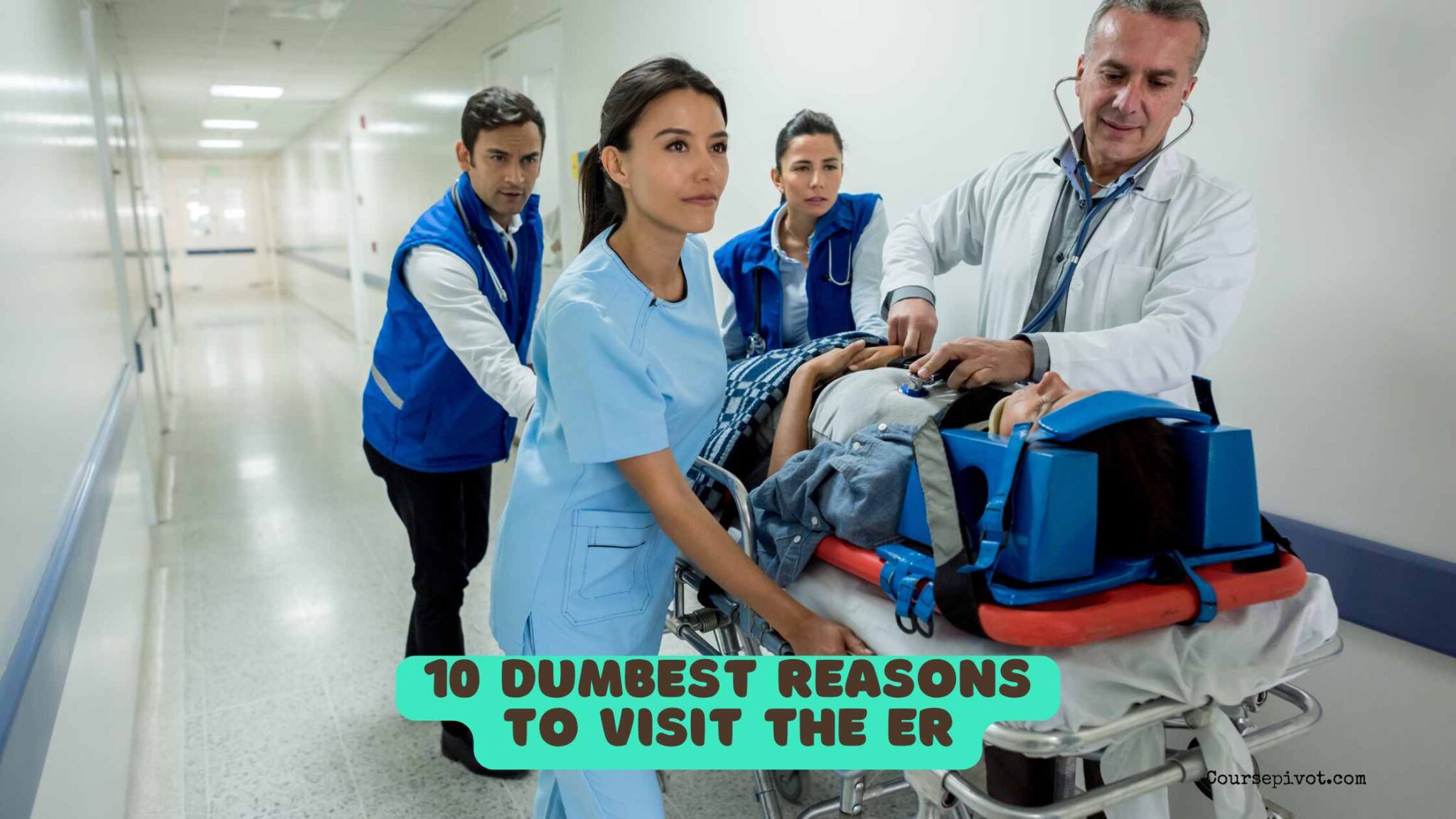
Emergency rooms exist for emergencies — chest pain, broken bones, severe allergic reactions, and the kinds of situations where minutes actually matter. They are staffed by professionals trained for the worst possible scenarios, and they are expensive, slow, and packed with genuinely sick people.
Which makes it all the more baffling that people show up for splinters.
Q: When should you actually go to the ER? A: Go to the ER for anything life-threatening or severely debilitating — chest pain, difficulty breathing, stroke symptoms, deep wounds that won’t stop bleeding, severe allergic reactions, or major injuries. For everything else, urgent care, a primary care visit, or a phone call to a nurse line is almost always the right first move.
This list celebrates the most baffling, unnecessary ER visits documented by healthcare workers — not to shame anyone, but to remind us all that there are better options. And if anxiety about your health is part of what sends you to the ER when you probably don’t need to go, 7 ways to stop anxiety before it starts is worth reading first.
1. A Splinter
Not a nail through the hand. Not a shard of glass buried in the flesh. A splinter. A small, wooden, tweezers-and-ten-minutes problem that healthcare workers encounter more often than anyone would believe.
Emergency room nurses have documented patients who arrived by car, waited in triage, filled out paperwork, and sat for hours in a waiting room — all for a splinter in their finger that was barely visible to the naked eye.
What to do instead: Sterilize a needle or tweezers with rubbing alcohol, clean the area, and remove it. If a splinter is deep, infected, or lodged near the eye or under a nail, an urgent care clinic is the appropriate step — not the ER.
2. A Mild Sunburn
Sunburn is unpleasant. A truly severe sunburn — second-degree burns covering large areas of skin — can legitimately warrant medical attention. But a pink, mildly tender sunburn after a day at the beach is not an emergency by any clinical definition.
ER staff have reported patients arriving in visible distress over sunburns that looked like a light roast, asking for prescription pain relief and expressing confusion when told to use aloe vera and take ibuprofen.
What to do instead: Cool the skin with a damp cloth, apply aloe vera or a gentle moisturizer, drink water, take over-the-counter pain relief, and avoid more sun. See a doctor if blistering covers large areas or you develop fever and chills.
3. A Hiccup That Lasted More Than 20 Minutes
Hiccups are annoying. Hiccups that go on for hours can become genuinely exhausting. But hiccups — even persistent ones — are almost never an emergency, and the ER has essentially no special treatment to offer beyond what you can do at home.
This has not stopped people from driving themselves to the emergency room, demanding immediate evaluation, and sitting through a full triage process for a case of the hiccups they could have resolved by holding their breath and drinking water upside down.
What to do instead: Hold your breath, breathe into a paper bag, drink water slowly, swallow a teaspoon of sugar, or press gently on your closed eyelids. If hiccups persist for more than 48 hours without any relief, that actually warrants a non-emergency doctor’s appointment — not an ER visit.
4. A Mild Cold
Runny nose. Slight sore throat. Tiredness. These are the hallmarks of a common cold — one of the most well-understood and self-limiting conditions in human medicine. The ER cannot cure a cold. Nobody can. It resolves on its own in 7 to 10 days whether you visit a hospital or not.
And yet.
What to do instead: Rest, hydrate, take over-the-counter cold medicine, and wait. See a primary care doctor if symptoms worsen significantly, last longer than 10 days, or are accompanied by a fever above 103°F that doesn’t respond to medication.
The emergency room is not a walk-in clinic. Showing up for a cold when the waiting room is full of people in genuine distress is a real cost — to your time, your wallet, and other patients who need care urgently.
5. A Bug Bite That Was “Just Itchy”
Bug bites can occasionally cause serious reactions — anaphylaxis, Lyme disease symptoms, or signs of infection after days of worsening redness and swelling. In those situations, medical attention is absolutely warranted.
But an itchy bug bite with no swelling, no spreading redness, no systemic symptoms, and no history of allergic reactions is not a medical emergency. Healthcare workers have seen this more times than they can count.
What to do instead: Apply hydrocortisone cream or take an antihistamine. A cold compress reduces itching and swelling. If a bite becomes warm, increasingly painful, develops a bullseye rash, or is accompanied by fever, that warrants a doctor’s visit — not necessarily an ER.
6. Mild Indigestion or Gas Pain
Severe chest pain can absolutely indicate a heart attack and warrants immediate emergency care. The challenge is that gas pain and indigestion can sometimes feel alarming enough to create genuine confusion — and that is understandable.
What is less understandable is arriving at the ER already confident that it is gas, having experienced this exact situation many times before, and showing up anyway because it is more convenient than calling a nurse line or taking a Gas-X.
What to do instead: Over-the-counter antacids, simethicone, or simply walking around can resolve most indigestion. If you have chest pain that is new, severe, radiates to your arm or jaw, or comes with shortness of breath, go to the ER immediately. If it feels exactly like last Tuesday’s gas, take the antacid.
7. A Paper Cut
Paper cuts are disproportionately painful relative to their actual severity, which is a well-documented phenomenon rooted in the density of nerve endings in fingertips. This does not make them emergencies.
A paper cut should be rinsed, dried, and covered with a bandage. If a paper cut becomes infected over several days — signs include increasing pain, warmth, swelling, pus, or red streaking — then a doctor’s appointment is appropriate.
What to do instead: Wash the cut with soap and water, apply antibiotic ointment, cover with a bandage. That is it. That is the complete treatment plan.
8. Needing a Refill on Non-Emergency Medication
Emergency rooms are not pharmacies, and they are not equipped or intended to serve as a substitute for a primary care doctor for routine prescription management. Showing up to the ER requesting a refill on blood pressure medication, allergy medication, or a routine prescription — because you ran out and it is more convenient than making an appointment — is a significant misuse of emergency resources.
What to do instead: Call your primary care physician, use a telehealth service, or contact a retail clinic. Most pharmacies can also provide emergency supplies of certain medications in urgent situations if you explain that you have run out.
Using the ER for prescription refills contributes to longer wait times for people with actual emergencies and drives up healthcare costs for everyone — including through higher insurance premiums.
9. Mild Anxiety With No Physical Emergency
Anxiety can produce genuinely frightening physical symptoms — racing heart, chest tightness, shortness of breath, dizziness. Panic attacks can feel identical to heart attacks. There is a real gray zone here, and people experiencing their first panic attack absolutely should seek evaluation.
The issue arises when someone who has previously been diagnosed with anxiety and has an established treatment plan repeatedly visits the ER during episodes that match their known pattern — bypassing their therapist, their prescribed medication, and their coping strategies.
What to do instead: If you have an anxiety disorder, work with your mental health provider on an action plan for acute episodes. Recognizing the common signs of stress early gives you the window to use those strategies before anxiety escalates. If symptoms are genuinely new or feel physically different, evaluation is appropriate.
10. General “Feeling Weird”
“I just don’t feel right” is the kind of vague symptom that sends some people to the ER — not because they can identify anything specific, but because they feel off and the ER feels like the most thorough option.
Healthcare workers understand the impulse. But the ER cannot diagnose vague wellness — it is optimized for acute, specific emergencies. Showing up with “I just feel weird” without any measurable symptoms typically results in a battery of expensive tests, a bill in the hundreds or thousands of dollars, and a conclusion that nothing emergency-level is present.
What to do instead: Track your symptoms. Call your primary care doctor. Use a telehealth service. If something specific and concerning develops — persistent fever, severe pain, neurological symptoms — then escalate accordingly.
A Final Word on Knowing the Difference
The point here is not to discourage anyone from seeking medical care when they genuinely need it. When in doubt about something potentially serious, err on the side of getting checked. But building basic health literacy — knowing what warrants emergency care versus urgent care versus a phone call — is a genuinely valuable life skill.
For families with elderly relatives, knowing the signs that an elderly parent needs help can help you make better, faster decisions about when intervention is actually needed — rather than either overcorrecting or missing real warning signs.